
ROPP capper change parts for multiple bottle and cap formats.
Change parts allow a ROPP capper to handle different bottles and closures, but they should be specified from the expected format range. The more varied the formats, the more important documented setup becomes.
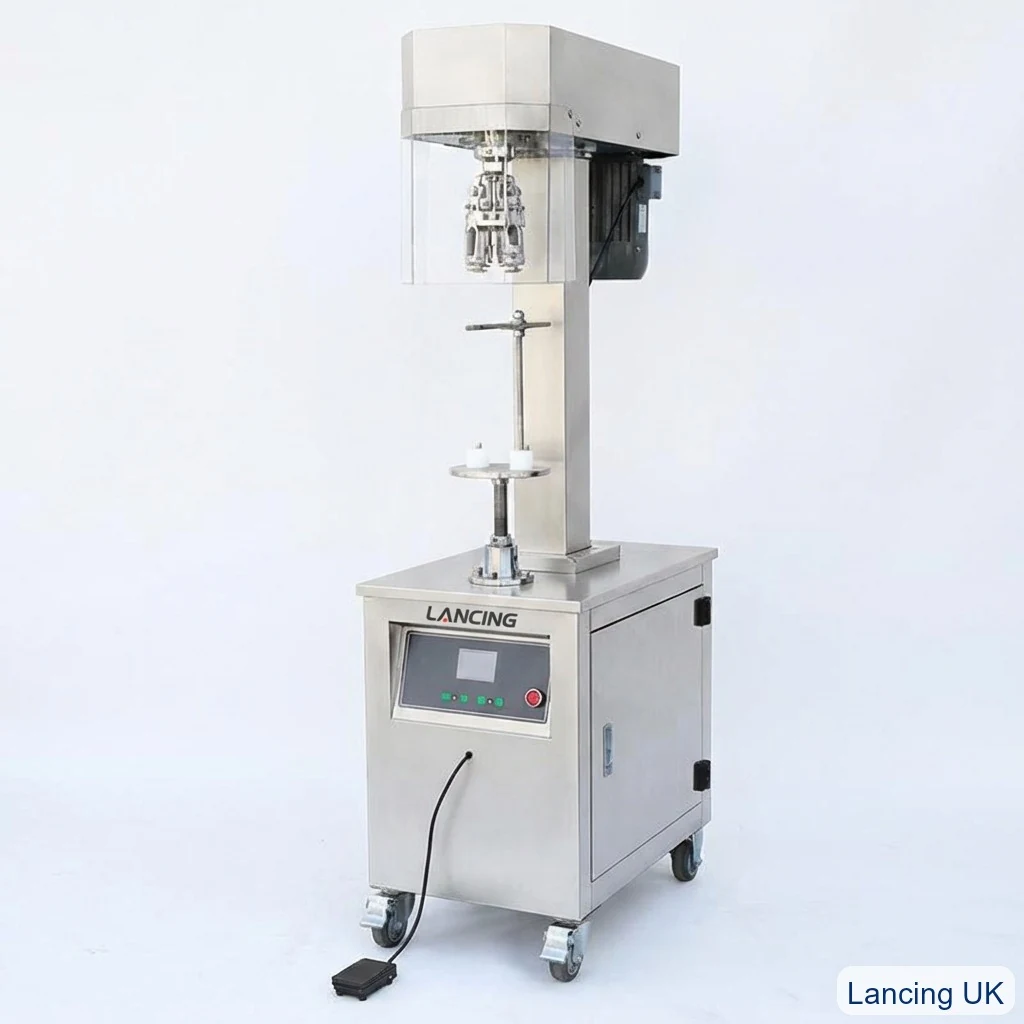
Tooling planning
Change parts must match the real format range.
Typical change parts can include bottle guides, starwheels, chucks, cap feed tracks, head components or format-specific fixtures. Some semi-automatic machines need fewer parts than fully automatic systems.
Planning change parts before purchase avoids discovering later that a key bottle or cap format cannot be run efficiently. A format list is the best starting point.
Format list details
- Bottle height range
- Bottle diameter range
- Cap diameter range
- Cap height range
- Neck finish types
- Bottle material
- Cap feed method
- Changeover time target
Specification guide
Common ROPP capper change parts
The exact list depends on the machine design and pack formats.
| Area | Why it matters | Action |
|---|---|---|
| Bottle guides | Different bottle shapes | Keeps bottle centred and stable |
| Starwheels | Rotary/controlled transfer | Positions bottles accurately |
| Cap feed parts | Different cap sizes | Presents caps consistently to the capping head |
Process
Practical route from enquiry to production.
Prepare a format matrix so each proposed change part is tied to an actual bottle, closure and approved setup.
1. List current and future formats
Give each intended bottle, closure and feed route a format ID. Distinguish launch formats from possible future additions.
2. Group similar bottle/cap sizes
Check body shape, neck support, cap construction, insert and feeding route before treating formats as interchangeable.
3. Identify tooling differences
List guides, supports, starwheels, cap tracks and head or roller parts only where they apply to the proposed machine.
4. Quote change parts with the machine
Identify which parts and format trials are included, which are optional and which need a later engineering review.
5. Document setup for each format
Keep labelled parts, approved settings and first-off samples with the format record used to authorise restart.
Related ROPP guidance
Continue the machine-selection process.
These pages cover the wider equipment range, technical checks and the enquiry route for samples and quotations.
FAQ
Questions about ropp capper change parts.
What are ROPP capper change parts?
They are format-specific parts used to adapt the machine to different bottles or caps.
Do semi-automatic machines need change parts?
Sometimes, but they often need fewer change parts than fully automatic systems.
Do rotary machines need starwheels?
Rotary systems commonly use starwheels or similar handling parts for specific bottle formats.
Can change parts be added later?
Often yes, but it is better to plan known future formats at the start.
Need help with this ROPP capping requirement?
Send your cap size, bottle height, neck finish, samples and target output for practical advice.
Format governance
Use one controlled matrix for bottles, caps, parts and first-off approval.
A cap diameter alone does not define a changeover. Bottle height, body shape, neck location, cap geometry, liner/insert and feeding route can each require a different part or setting.
| Format field | Record | Changeover consequence |
|---|---|---|
| Bottle | Supplier reference, height, body/neck geometry, stability and finish drawing. | Support, guides, starwheel/pocket, conveyor and head height. |
| Closure | Supplier reference, diameter/height, liner, insert, band and decoration. | Pressure pad, rollers, cap track, chute, transfer and quality standard. |
| Machine set-up | Parts list, labelled positions, recipe/settings and tooling identity. | Repeatable installation and removal without trial-and-error adjustment. |
| First-off quality | Approved sample, visual criteria, opening and leak methods. | Production remains on hold until the new format is independently released. |
| Storage and maintenance | Part condition, location, cleaning, wear and replacement identity. | Prevents mixed or damaged parts from entering the next changeover. |
Trial every distinct format
Use the sample-trial plan to identify which bottles and caps share a proven setting and which require separate tooling or acceptance.
Verify cap feed after changeover
Where caps are automatic, include orientation, chute, transfer and recovery in the changeover. Use the cap-feed checklist.
Build a complete ROPP format matrix before ordering change parts.
Send every current and planned bottle/closure combination with drawings and samples.