
Formed ROPP closure
Starts as a shell whose skirt and band are formed around the bottle finish during capping.
Many aluminium bottle screw caps are applied using the ROPP process. Unlike pre-threaded plastic screw caps, a ROPP aluminium cap is formed onto the bottle thread during the capping cycle.
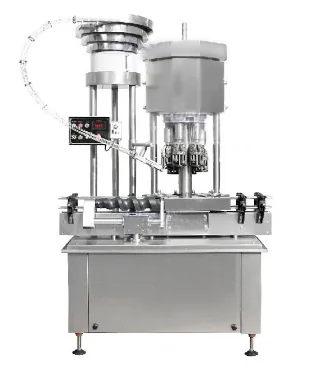
Closure difference
The machine must compress the liner and use rollers to form the cap skirt around the neck thread. That is why cap drawings, cap height, skirt material, liner type and bottle finish matter.
For branded aluminium caps, careful setup also protects the cap finish. Printed and lacquered caps should be checked for scuffing, deformation and consistent opening feel after capping.
Specification guide
These points help avoid common ROPP closure faults.
| Area | Why it matters | Action |
|---|---|---|
| Thread formation | Opening and reseal feel | Check roller profile and neck finish |
| Liner compression | Leak prevention | Check top pressure, cap height and sealing land |
| Print protection | Brand appearance | Check cap handling and roller contact |
Process
These steps help turn the search query into a working ROPP capping specification.
Review aluminium cap samples.
Check cap and bottle drawings.
Select cap feed and capping head.
Set top-load and rollers.
Validate torque and visual finish.
Related ROPP guidance
These pages cover the wider equipment range, technical checks and the enquiry route for samples and quotations.
FAQ
Not always, but many aluminium tamper-evident bottle caps are applied using the ROPP process.
Usually no. ROPP caps need forming rollers rather than simple tightening torque.
Yes, but setup should avoid scuffing and preserve cap appearance.
The liner helps create the seal, so compression and compatibility with the product are important.
Send your cap size, bottle height, neck finish, samples and target output for practical advice.
Closure identification
No. A ROPP closure is normally formed onto a compatible bottle finish by rollers that create the thread and tamper-band profile. A pre-threaded aluminium cap is tightened onto an existing thread. Confirm the closure drawing and bottle finish before choosing the capping method.
Starts as a shell whose skirt and band are formed around the bottle finish during capping.
Arrives with a thread and is applied by controlled tightening rather than thread rolling.
Use the closure drawing, supplier designation, internal profile, liner/insert and matching bottle-finish specification.
The phrase aluminium screw cap can describe a pack appearance without fully specifying how the closure is applied. Ask the closure supplier to identify whether the intended cap is formed on the bottle through the ROPP process or uses another application method. Keep that answer with the cap and bottle references.
For a confirmed ROPP pack, distinguish structural closing requirements from decorative finish requirements. Show the printed areas and any surfaces where marks would be unacceptable. Include the actual production cap in the review, because an undecorated substitute does not establish the appearance result for a printed version.
Confirm the closure application method with its supplier; the material name alone is not a complete machinery specification.
Include the intended finish when appearance is part of acceptance, and identify it separately from plain trial components.