
Technical depth
A specialist should distinguish bottle-finish, liner, roller, pilfer-band and feed issues instead of treating every defect as “torque”.
A ROPP capping supplier should understand closure forming, not just machine sales. The supplier needs to assess samples, cap drawings, production speed, line layout and the quality checks needed after capping.
Selection criteria
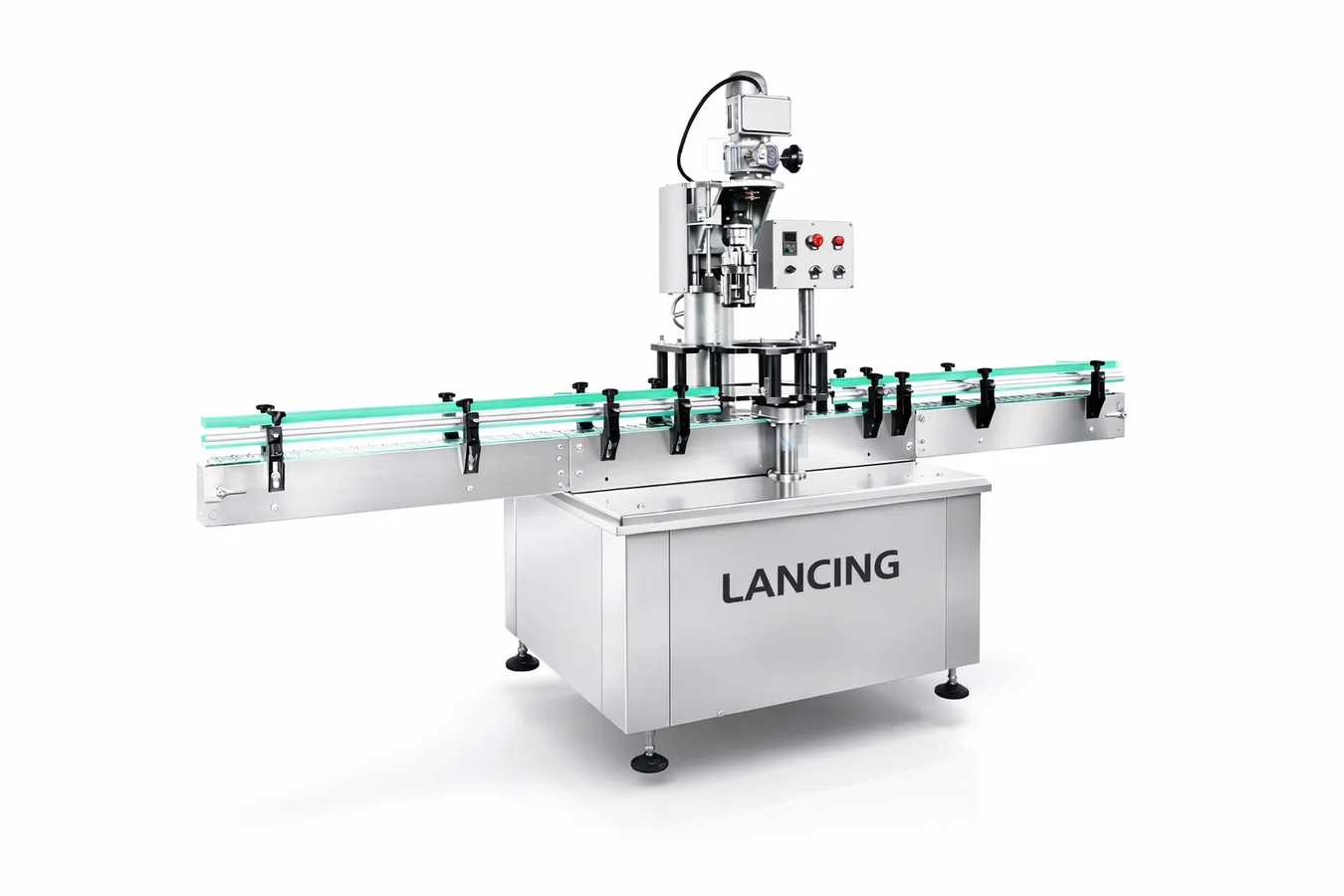
ROPP caps can look simple, but the application process requires a controlled relationship between top pressure, roller profiles and the bottle neck. A knowledgeable supplier will ask for samples and will not specify the machine from cap diameter alone.
The strongest supplier choice is usually the one that understands your line conditions, bottle stability, changeover needs and operator workflow. That reduces commissioning time and helps keep opening torque and tamper-band appearance consistent.
Specification guide
These points help separate a general machinery reseller from a ROPP specialist.
| Area | Why it matters | Action |
|---|---|---|
| Sample review | Critical | Confirms cap and neck finish compatibility before equipment selection |
| Application knowledge | Critical | Helps solve torque, leakage, skew and pilfer-band issues |
| Support and commissioning | Important | Ensures the machine works under real production conditions |
Process
These steps help turn the search query into a working ROPP capping specification.
Discuss pack format and cap samples.
Map production and changeover needs.
Select machine format.
Confirm tooling and quality checks.
Install with operator guidance.
Related ROPP guidance
These pages cover the wider equipment range, technical checks and the enquiry route for samples and quotations.
FAQ
Specialist knowledge of aluminium closure forming, neck finishes, roller setup, torque and tamper band quality.
It can help. Cap and bottle choices directly affect the capping setup and machine specification.
Yes, and that is useful when you may scale from batch work to full-line automation.
For UK sites, local support can simplify sample trials, service, installation and urgent advice.
Send your cap size, bottle height, neck finish, samples and target output for practical advice.
Supplier evidence
A machine catalogue can describe architecture; a project supplier should also explain the packaging assumptions, tooling evidence, line boundary and finished-pack test plan.
| Supplier question | Useful answer should include |
|---|---|
| How will you confirm bottle and closure compatibility? | Drawings, production samples, a controlled sample trial and retained approved packs. |
| How is the speed figure qualified? | Model, pack, cap-feed method, line condition, run duration, stops, rejects and accepted-output definition. |
| How are multi-head results controlled? | Head/station traceability, first-off samples, raw quality results and fault isolation. |
| Who owns cap feeding and line interfaces? | Mechanical, electrical and controls responsibility schedule with a clear handover point. |
| How is the machine accepted? | FAT/SAT scope, test methods, witnesses, deviations, documentation and training. |
| What happens after a format change? | Change parts, labelled settings, first-off approval, retained sample and escalation rule. |
A specialist should distinguish bottle-finish, liner, roller, pilfer-band and feed issues instead of treating every defect as “torque”.
Look for controlled packaging lots, agreed methods, raw results and retained samples.
Expect a clear transition from sample trial through FAT, installation, SAT and operator training.
Send the current pack, line, format and acceptance information so the recommendation can be explained and tested.
After commissioning
Confirm how machine identity, drawings, programs, settings, tooling and approved-pack references will be retained; how a fault should be reported; what information is needed before remote or site support; how parts are identified; and how work is verified before production release. Scope and availability should be agreed for the specific equipment and site.
A useful service route preserves the distinction between packaging variation, machine condition and connected-line faults rather than starting with an unverified adjustment.
Provide machine and pack references, fault evidence, recent changes, safe access requirements and the required release test.