
Pack schedule
List every bottle and closure combination, supplier reference, liner/insert, current sample status and future format. Mark which formats are mandatory at delivery.
A good ROPP quotation needs enough detail to match the machine to the pack and production target. Sending samples, drawings and line information helps Lancing UK recommend the right capper without unnecessary back-and-forth.
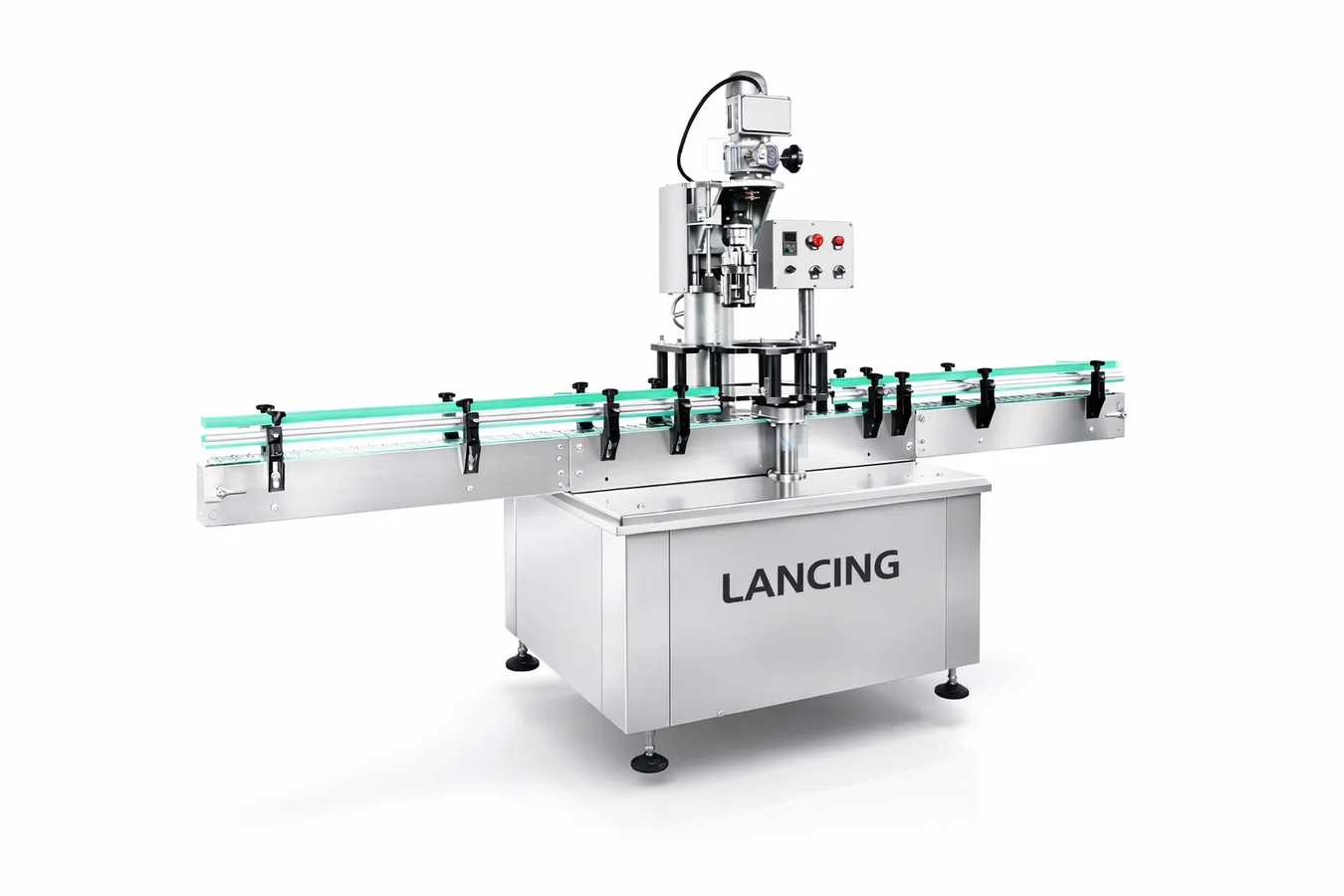
Faster quoting
The most useful quoting information includes bottle and cap samples, the required output speed, whether the line is manual or automatic and how many formats the machine must run.
If you already have a filling line, include conveyor dimensions, available floor space and the equipment immediately upstream and downstream of the capper. This helps identify integration needs early.
Specification guide
More detail usually means a more accurate proposal.
| Area | Why it matters | Action |
|---|---|---|
| Bottle and cap samples | Highest value | Confirms compatibility and tooling needs |
| Speed target | High value | Determines semi-auto, inline or rotary route |
| Line layout | High value | Identifies conveyors, controls and cap feeding needs |
Process
These steps help turn the search query into a working ROPP capping specification.
Send samples or details.
Discuss production target.
Select machine format.
Confirm change parts and options.
Receive proposal and next steps.
Related ROPP guidance
These pages cover the wider equipment range, technical checks and the enquiry route for samples and quotations.
FAQ
Yes, but samples normally make the recommendation more accurate.
Send cap size, bottle dimensions, samples, output speed and line photos if available.
Yes. Future cap and bottle sizes may affect the machine choice and change parts.
Yes. Early advice can help prevent cap and neck compatibility problems.
Send your cap size, bottle height, neck finish, samples and target output for practical advice.
Quotation evidence pack
A useful quotation should identify the assumptions that still need confirmation and the evidence required before a machine is accepted.
List every bottle and closure combination, supplier reference, liner/insert, current sample status and future format. Mark which formats are mandatory at delivery.
State required accepted output, run length, changeover frequency, operator role, cap replenishment and adjacent machinery. Include planned start-up volume as well as future demand.
Define sample trials, quality methods, FAT, SAT, documentation, training and sign-off. Identify who supplies packaging and who owns each acceptance limit.
| Quotation statement | What should accompany it |
|---|---|
| Reference output | Selected model, bottle, closure, cap feed, line condition, run definition and accepted-bottle criteria. |
| Format range | Named bottles/caps and included change parts; untested formats shown as subject to review. |
| Utilities | Project-specific schedule from final machine documentation rather than a generic assumption. |
| Scope exclusions | Cap storage, feeder, conveyors, guards, inspection, coding, integration or site work not included. |
| Acceptance | Sample, FAT and site evidence, methods, witnesses and treatment of deviations. |
If the incoming cap is pre-threaded, review the ROPP versus screw-capper comparison before requesting forming tooling.
Quotation comparison questions
A quotation is most useful when its pack, output, acceptance and project-delivery boundaries are explicit.
Give every supplier the same bottle and closure evidence, format list, accepted-output definition, line boundary, cap-feed scope and quality criteria. Then compare inclusions, exclusions, conditions, change parts, trials, installation and support as well as the base machine price.
Depending on the proposal, exclusions can include cap feeders, conveyors, change parts, guarding interfaces, coding or inspection, electrical integration, delivery, lifting, installation, utilities, commissioning, SAT, training, spares and additional trials. The quotation should state each boundary clearly.
It should identify the bottle and cap conditions behind any reference output, the difference between cycles and accepted bottles, the trial or FAT method, the quality checks, the party setting acceptance limits and any sample or line conditions still outstanding.
Include them whenever they are required to prove the machine before dispatch, integrate it safely on site or hand over a repeatable operating method. If they are not included, the quotation should identify who performs those activities and what evidence will release the machine.
Quotation boundary
A useful quotation identifies the supplied machine boundary, cap feeder and conveyors, controls and signal ownership, guarding and access assumptions, approved formats, tooling, trial condition, accepted-output method, finished-pack checks, documentation, installation, training and exclusions.
State the reference model rate separately from the project acceptance condition and accepted-bottle definition.
List supplied sensors, signals, HMI functions, reject interfaces and connected-equipment responsibilities.
Identify guarding, access, declarations/instructions, site interfaces and work outside the supplier boundary.