
Pre-order review
Check the production bottle, closure, liner/insert, format range, target accepted output and line layout. Identify evidence gaps before tooling and cap feeding are finalised.
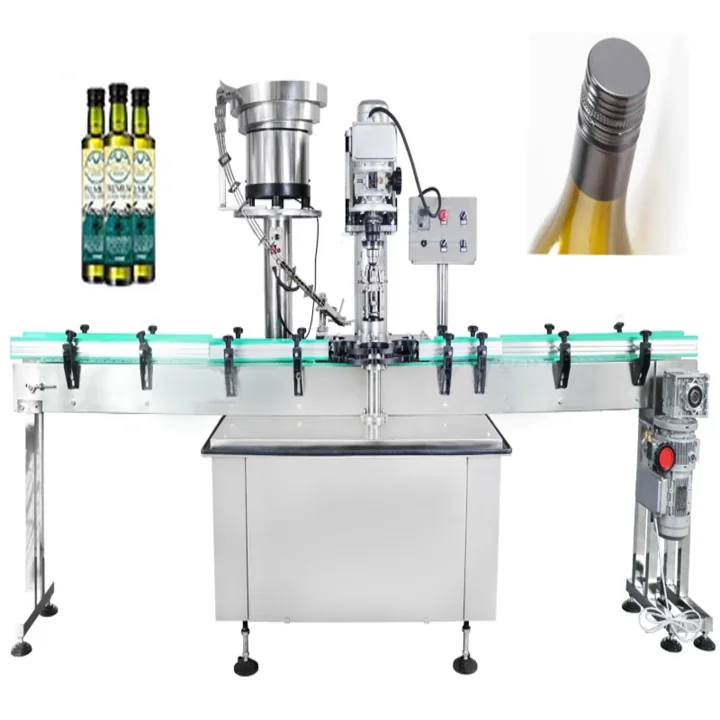
Lancing UK supplies ROPP capping machinery for aluminium roll-on pilfer-proof closures across the UK, Europe and worldwide. The correct machine depends on cap size, bottle neck finish, speed target, sample quality and whether the line needs manual, semi-automatic or automatic cap handling.
Buyer intent
ROPP closure performance is decided by the complete pack: cap, liner, bottle neck finish, top-load pressure and roller setup. Buying from a specialist supplier helps avoid the common problems of damaged skirts, poor tamper-band tuck, low opening torque or cap leakage after filling.
Lancing UK can work from bottles, closures, drawings and production targets to narrow the machine choice. That may mean a table-top or pedestal semi-automatic unit for small runs, an automatic inline capper for conveyor-fed production or a rotary multi-head system for higher throughput.
Specification guide
Use production volume and changeover frequency to choose the right route.
| Area | Why it matters | Action |
|---|---|---|
| Small batch and trials | Semi-automatic ROPP capper | Lower investment, quick setup and suitable for varied bottle sizes |
| Growing bottling line | Inline automatic ROPP capper | Conveyor integration, repeatable cap placement and controlled throughput |
| High output production | Rotary multi-head ROPP capper | More capping heads, smoother continuous operation and higher speed potential |
Process
These steps help turn the search query into a working ROPP capping specification.
Review samples and closure drawings.
Confirm cap size, bottle height and neck finish.
Agree speed target and automation level.
Trial or specify capping head setup.
Install, commission and validate torque/finish.
Related ROPP guidance
These pages cover the wider equipment range, technical checks and the enquiry route for samples and quotations.
FAQ
Yes. Lancing UK supplies ROPP capping machinery from its UK base for domestic and international projects.
Yes. Bottle and cap samples are strongly recommended because ROPP caps are formed onto the bottle neck during capping.
A semi-automatic or table-top ROPP capper is often the most practical route for lower-volume production and trials.
Often yes, but change parts and settings depend on the cap size, bottle neck finish and machine design.
Send your cap size, bottle height, neck finish, samples and target output for practical advice.
UK project delivery
The value of local project support is strongest when sample evidence, site interfaces, acceptance actions and training are carried through the same technical file.
Check the production bottle, closure, liner/insert, format range, target accepted output and line layout. Identify evidence gaps before tooling and cap feeding are finalised.
Use representative packaging and an agreed FAT plan. Record accepted samples, machine settings, run conditions, deviations and site-only actions.
Verify installation, utilities, line signals, current packaging lots and connected-machine behaviour, then train named operators and maintainers.
Local installation and safety requirements still depend on the final machine, options, workplace and competent site assessment. The project documentation controls utilities and risk boundaries.
Send the pack, floor plan, line interfaces, required output and commissioning scope.
UK production support
Support can be scoped more accurately when the request identifies the machine, approved bottle and closure, fault pattern, affected head or format, alarms, recent changes, safe access requirements and the checks the site will use before release. Availability, parts compatibility and attendance scope remain machine- and project-specific.
Keep photographs, labelled good and rejected packs, settings and post-work results with the site’s controlled machine record.