
1. Scope review
Identify the machine, pack, fault, documentation, access, parts situation and responsible site contact before attendance or remote review.
Organise machine identity, approved pack references, fault evidence, safe access and post-work verification before repair or service scope is agreed.
Answer first
ROPP capper servicing should start with a controlled fault description, machine identity, approved pack reference and safe access plan. The support scope can then distinguish closure or bottle variation from feeder, bottle-handling, capping-head, roller, sensor, drive or controls faults and define the evidence required before production is released again.
Lancing reviews each request against the available machine information, parts access, site conditions and required production window. Availability and scope are confirmed for the specific equipment and fault; this page does not promise universal parts compatibility or an emergency response time.
Fault triage
These are evidence routes, not remote diagnoses. Safe inspection and the machine documentation take precedence.
| Observed symptom | Evidence to collect | Areas that may need controlled assessment |
|---|---|---|
| Fault affects one head or station | Head identity, labelled samples, settings and comparison with a known stable head. | Pressure pad, roller profile/condition, bearings, lift, alignment and head-specific tooling. |
| Fault affects every bottle after a packaging change | Old/new bottle and closure drawings, lot references, incoming measurements and retained samples. | Pack compatibility, sealing land, shell/liner condition, bottle support and setup range. |
| Intermittent missing or misapplied caps | Cap-feed state, alarm sequence, gap pattern, video and stop/restart conditions. | Feeder, chute, escapement, cap-present detection, bottle spacing and transfer timing. |
| Thread or tamper-band quality drifts during a run | Time-linked samples, head identity, temperature/lot changes and production stop record. | Wear, looseness, lubrication condition, packaging variation, head loading and settings control. |
| Stops, rejects or line handshakes are inconsistent | PLC/HMI messages, input/output state, event time and adjacent equipment condition. | Sensors, cable/connection condition, permissives, tracking, controls ownership and recovery logic. |
| Leak or opening failure with acceptable appearance | Named test method, conditioning, raw results, liner and sealing-land evidence. | Pack system, top pressure, contamination, damage and functional test boundary—not appearance alone. |
Support workflow
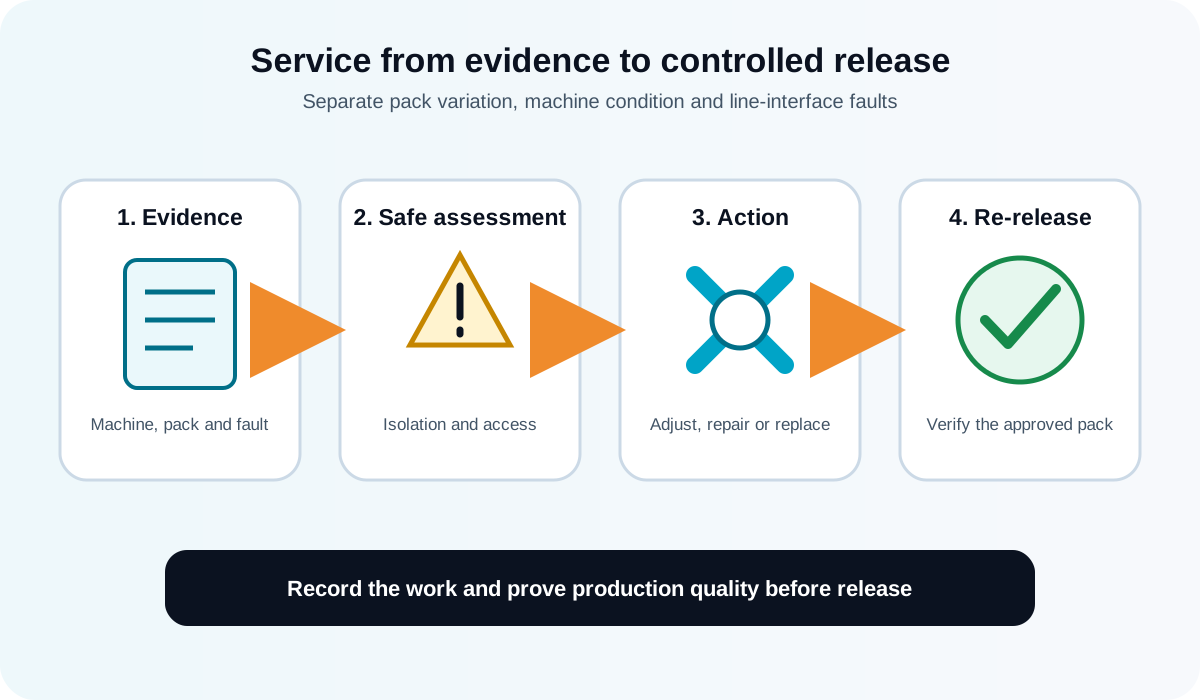
Identify the machine, pack, fault, documentation, access, parts situation and responsible site contact before attendance or remote review.
Use the site’s authorised isolation, guarding and access arrangements. Do not collect evidence by bypassing protective devices.
Record adjustments, repaired or replaced parts, settings, software or control changes and any condition that remains unresolved.
Verify first-off packs, relevant heads/stations, stops, rejects and the agreed functional checks before returning the line to normal production.
Remote or site assessment
A remote review can help identify missing information, compare settings or sample evidence and determine whether the problem appears to follow the packaging, one head, the cap feed or a line interface. It should not be used to direct unsafe intervention or to replace measurements that require attendance.
Site attendance may be appropriate where controlled mechanical inspection, alignment, tooling, electrical or controls assessment, installation condition or witnessed production testing is required. Confirm the safe work boundary, machine availability, site permits and who can approve the finished pack before scheduling.
Post-work verification
The verification depth should match the action and the pack risk.
Retain the parts, settings and adjustments changed, plus any measurements, unresolved wear, temporary measure or future action.
Link first-off and running samples to the approved bottle/closure lot, active head or station and the agreed visual and functional tests.
Include normal output, cap replenishment, controlled stops, rejects, fault recovery and restart so the work is not approved from a single bottle.
Use the ROPP cap quality inspection guide and accepted-output test guide to structure the release evidence.
Buyer questions
Each request is reviewed against the machine identity, documentation, parts access, fault type and safe scope. Do not assume that every make, age or control platform can be supported until those details have been assessed.
Yes where the symptom affects the finished cap. Label good and failed bottles by format, cap lot, head or station and time. Uncapped bottle and closure samples can also help separate packaging variation from machine condition.
Provide a time-linked event record, HMI messages, line state, affected format, packaging lots, safe video and information about recent maintenance or changeover. “Stops sometimes” is not enough to reproduce the condition.
Check the machine’s safe condition, approve first-off packs, sample relevant heads or stations, run the agreed quality tests and observe normal stop/restart and reject behaviour before production release.
Include machine identity, approved pack references, fault evidence, recent changes, safe access requirements and the checks needed before release.