
Reference machine rate
A model or configuration figure used to shortlist equipment. It remains conditional on the selected bottle, closure, tooling, feed and line.
Define accepted bottles, time the real operating condition and record the losses that separate a machine’s reference rate from reliable production output.
Answer first
Accepted output is the number of finished bottles that meet the agreed closure requirements during a stated clock period and operating condition. It should identify the bottle, closure, cap feed, machine configuration, operator or line arrangement, stops, rejects, sampling and tests used to decide whether each pack is acceptable.
A catalogue or model rate remains useful for initial selection, but it is not a promise that the connected line will produce the same number of saleable bottles. The project test should state its assumptions so the result can be repeated at site.
Comparable terminology
Using one label for different measurements can make quotations and trials look comparable when they are not.
A model or configuration figure used to shortlist equipment. It remains conditional on the selected bottle, closure, tooling, feed and line.
All bottles processed during the defined period, before removing rejects or unverified packs.
Bottles released against the agreed visual, opening, leak, tamper-band and other project checks.
Observed gross rate = gross bottles ÷ observed hours. Accepted output rate = accepted bottles ÷ observed hours. Reject proportion = rejects ÷ gross bottles. Keep the raw bottle counts, actual seconds and reason-coded loss log with every calculated figure.
Test design
| Test control | Define before the run | Retain as evidence |
|---|---|---|
| Packaging condition | Approved bottle and closure references, production-equivalent lots, fill condition, inserts/liners and decoration. | Lot identity, photographs, uncapped references and retained approved finished samples. |
| Machine condition | Model, head/station count, tooling, settings, guides, support, cap feeder and line speed/recipe. | Set-up record, part identity and first-off approval. |
| Operating boundary | Which upstream/downstream equipment is running, accumulation limits, replenishment method and inspection workload. | Layout or line description, signal state and named operator/witness roles. |
| Clock boundary | Start event, stop event, planned sampling, cap refill treatment and whether changeover or warm-up is excluded. | Start/finish timestamps, actual seconds and a timestamped event log. |
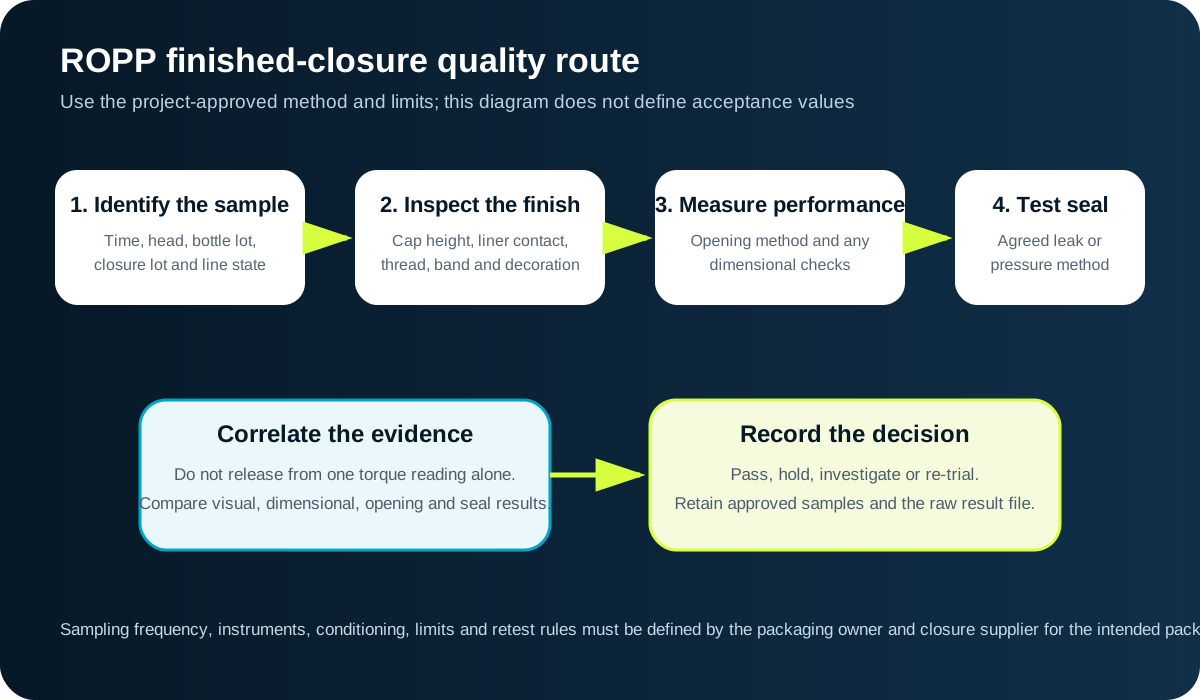
| Acceptance method | Visual standard, opening method, leak/pressure method, tamper-band check, conditioning and sample frequency. | Raw results, reject reasons, sample identity, head/station and acceptance authority. |
Loss analysis
Do not combine every interruption as “machine downtime”. Separate packaging, feeding, transfer, capping, inspection, operator, upstream, downstream and planned-test losses. This distinction directs corrective work to the actual constraint and prevents a capper adjustment being used to mask a bottle, cap or line problem.
Head and station evidence
Retain first-off samples, stable-run samples and samples after a planned or fault stop. Link each result to settings, packaging lot, machine state and any operator intervention.
Identify every head/station and sample each one at agreed points. Repeat the matrix after tooling work, setting changes, cap refill, stops or any evidence of head-to-head variation.
The sampling frequency and test depth should follow the customer’s product and pack risk rather than a generic website number.
Buyer questions
State the chosen boundary. If routine inspection is required during normal production, include it in a production-representative run or report a separate rate with and without planned checks. Never omit the condition silently.
Long enough to expose the relevant replenishment, line-flow, sampling and stop/restart behaviour. The appropriate period depends on machine architecture, output, pack risk and the customer’s acceptance plan; agree it before testing.
Only when the approved test condition is representative of the factors being assessed. Filled weight, product residue, temperature, pressure and bottle stiffness can change handling or seal performance, so record and justify the condition.
Repeat the critical connected-line and finished-pack checks affected by transport, installation, utilities, adjacent equipment, site packaging and site operating conditions. Carry any unresolved FAT action into an owned SAT record.
Send representative bottles and closures, the required accepted output, line layout, cap-feed method and the finished-pack tests your quality team will use.
Inspection-adjusted output
Where automatic cap inspection forms part of the approved process, accepted output should reflect bottles that passed the defined inspection and remained correctly tracked through the reject point. Record false rejects, missed challenge packs, tracking losses, unconfirmed rejects and stops caused by the inspection system separately from capping-machine losses.
Challenge packs should be controlled and excluded from saleable output. Keep the camera or sensor recipe, reject-test result and sampled functional checks with the timed-run record.