
1. Detect
Make the pass/fail decision using the active recipe and a defined uncertainty response.
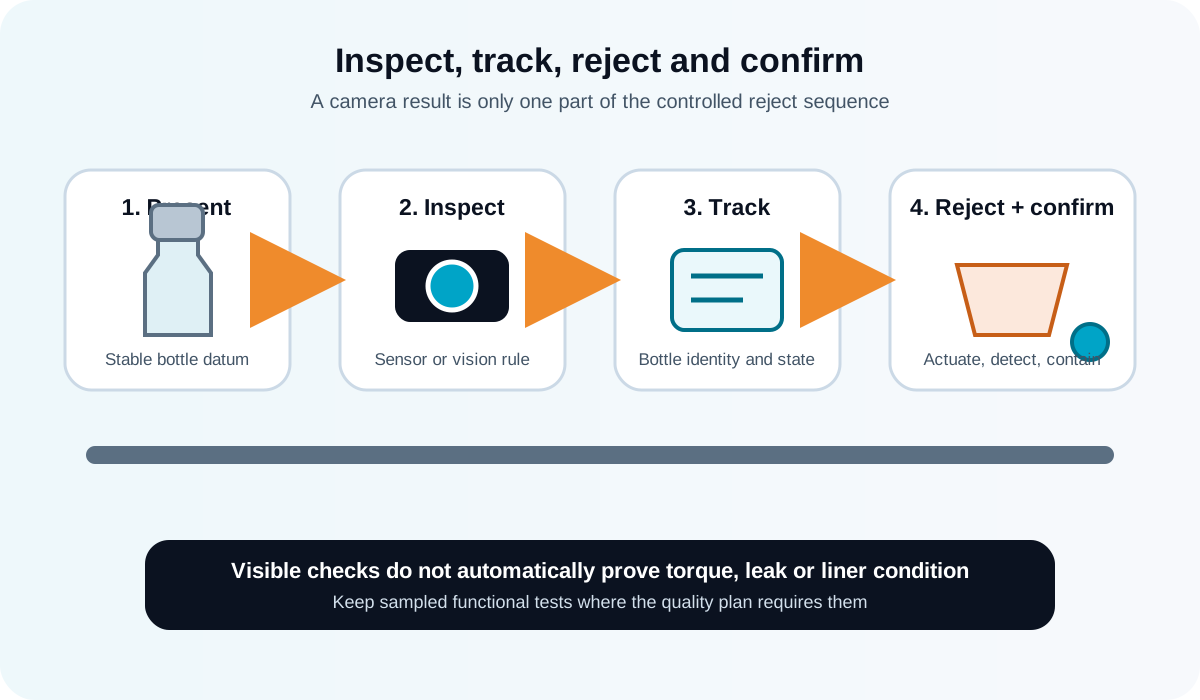
Define the visible cap fault, stable bottle presentation, inspection rule, tracking, reject confirmation and containment response as one connected system.
Answer first
Automatic ROPP cap inspection combines sensor or vision checks with bottle tracking and a confirmed reject route. It can detect visible or measurable conditions such as a missing, high, tilted or visibly damaged cap, but it does not by itself prove liner compression, opening torque, leak integrity or internal insert seating unless a validated method directly measures that condition.
The inspection specification should start with the fault that matters, approved and rejected reference packs, the bottle presentation available on the line and the action required when the result is uncertain.
Inspection plan
Do not ask one camera to “check the cap” without defining the pack condition and decision boundary.
| Pack condition | Possible automatic check | Important limitation |
|---|---|---|
| Missing cap | Presence sensor or vision check after capping. | Presence does not prove that the cap is correctly formed or sealed. |
| High or proud cap | Height/profile measurement relative to a controlled bottle datum. | Bottle-height and neck-finish variation must be included in the accepted reference range. |
| Tilted or crooked cap | Side profile or multi-view vision where the relevant edge remains visible. | One viewpoint can hide a defect on the opposite side of the closure. |
| Visible tamper-band fault | Side inspection of the band, bridge region or tuck-under profile. | Decoration, glare and bottle rotation can obscure the feature; define the visible fault precisely. |
| Wrong visible cap | Colour, artwork or shape comparison against the active recipe. | Similar decorated variants need controlled lighting and a verified changeover reference set. |
| Internal liner or insert condition | Only where a suitable sensor method can directly observe or infer the approved condition. | Do not claim a hidden component is verified when the chosen view cannot see or measure it. |
| Leak or opening performance | Separate inline or sampled functional test where justified. | A normal cap image cannot prove seal integrity or opening torque. |
Presentation and references
Reflective aluminium, embossed decoration, curved bottle shoulders, product droplets and uncontrolled background light can all change the image without changing the pack. Use stable bottle guides, a repeatable datum, suitable lighting and a view that exposes the actual defect.
Create the reference set from production-equivalent bottles and closures. Include normal cosmetic variation, every approved format and the smallest defect that the responsible quality team needs the system to separate from acceptable product.
Reject control
Make the pass/fail decision using the active recipe and a defined uncertainty response.
Carry the failed state through conveyor movement, gaps, accumulation and any intervening sensor events.
Remove the identified bottle into a controlled destination without destabilising neighbouring packs.
Detect successful removal and define what happens if the reject is missed, blocked, full or no longer traceable.
Controls and records
The inspection device, capper PLC, conveyor controls and reject station may be supplied by different parties. Record which device owns the trigger, recipe, encoder or shift register, reject output, confirmation input, stop request, alarm and production record.
Where inspection data is retained, link it to the active bottle/closure recipe, time, batch or run, inspection version and authorised setting changes. The required record depth depends on the customer’s quality system; do not add a data claim that the selected hardware cannot support.
Use the ROPP controls and line-signals guide to define permissives, faults, reset behaviour and interface ownership.
FAT and SAT
Test detection and reject control together rather than demonstrating only a camera image.
Run approved packs across expected speed, spacing, format, lighting and product conditions and record false reject and missed-fault evidence.
Introduce controlled reference faults one at a time and in consecutive groups, then prove tracking, rejection and confirmation.
Challenge blocked reject, bin full, missing confirmation, conveyor stop, guard stop, power cycle and authorised restart conditions.
Carry the approved reference packs, settings, outstanding actions and test record from FAT to the installed-line SAT.
Buyer questions
Not from a normal external image. Vision can identify visible geometry associated with a high or tilted cap, but opening torque or another functional measure needs a suitable test method and sampling plan.
The number and position follow the defect, cap geometry, decoration, bottle presentation and required coverage. One view may be sufficient for presence; a circumferential or partly hidden feature may need multiple views or controlled bottle rotation.
Not every isolated reject requires a stop. Define the response by risk and pattern: a single bottle may be removed, while consecutive faults, lost tracking or an unavailable reject route may require a controlled hold or stop.
Include the exact faults, reference packs, speed and spacing range, camera/sensor scope, lighting, bottle control, PLC interface, tracking, reject device, confirmation, guarding, data requirements and FAT/SAT method.
Send approved and rejected bottles, line speed, conveyor layout, inspection-to-reject distance and the tests that remain outside automatic vision.