
Finish data
Thread and bead geometry, neck height, diameter, tolerance and supplier revision.
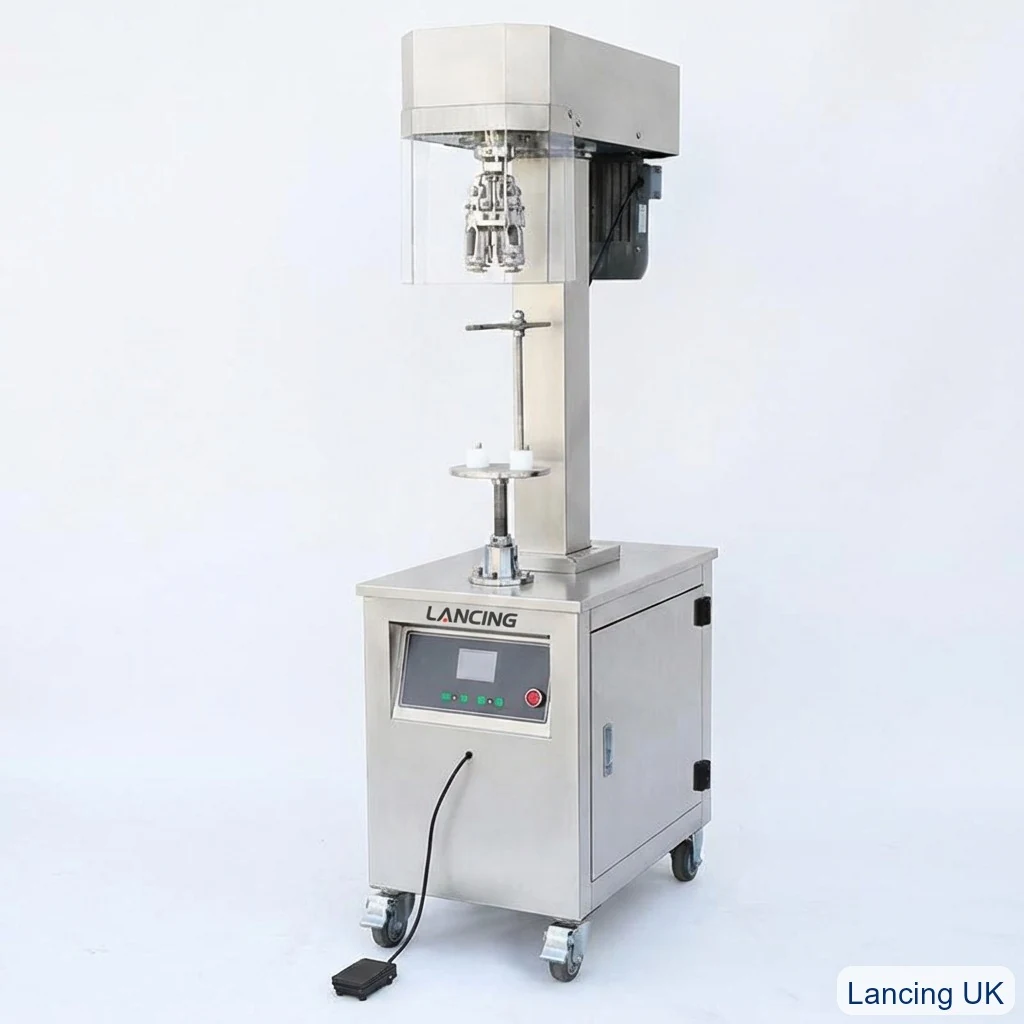
A ROPP bottle capping machine forms an aluminium cap onto the bottle neck, creating a resealable closure and visible opening evidence. The bottle must be stable, correctly located and compatible with the cap geometry.
Bottle compatibility
The machine needs the bottle to present the neck squarely to the capping head. Tall, narrow, lightweight or slippery bottles may require careful handling, guides or starwheels to keep the cap centred during the forming cycle.
For automatic bottle capping, conveyor transfer, bottle separation, cap placement and post-capping checks should be planned as one system. That is particularly important when the line also includes filling, labelling, coding and accumulation.
Specification guide
ROPP capping can be configured for different line types and production volumes.
| Area | Why it matters | Action |
|---|---|---|
| Table-top/pedestal | Manual bottle handling | Good for trials, short runs and varied formats |
| Inline automatic | Conveyor-fed bottles | Useful for filling lines and repeated production |
| Rotary multi-head | Continuous high output | Best for stable, consistent bottles and higher throughput |
Process
These steps help turn the search query into a working ROPP capping specification.
Locate the bottle accurately.
Place cap squarely on the neck.
Apply top pressure.
Form thread and tamper band.
Inspect torque, seal and appearance.
Related ROPP guidance
These pages cover the wider equipment range, technical checks and the enquiry route for samples and quotations.
FAQ
Yes, glass bottles are common for ROPP capping when the neck finish matches the cap.
Some plastic bottles are suitable, but rigidity and neck finish must be checked carefully.
Yes. Poor stability can cause cap skew, inconsistent forming and quality problems.
Often yes, but the conveyor, controls, cap handling and available space must be reviewed.
Send your cap size, bottle height, neck finish, samples and target output for practical advice.
Bottle evidence
Provide the controlled neck-finish drawing, bottle material, height and body diameter, base and shoulder geometry, empty and filled stability, fill level, product condition, production tolerances and representative samples. The capper must support the bottle while preserving access to the closure skirt and tamper band.
Thread and bead geometry, neck height, diameter, tolerance and supplier revision.
Base stability, guide contact, transfer points, centreline and support requirement.
Fill condition, temperature, surface contamination, format range and required output.