
Semi-automatic ROPP
An operator can place the cap and bottle before the head forms the closure. This supports trials, controlled batches and formats where manual inspection is valuable.
A ROPP machine forms the thread and pilfer band of a compatible aluminium shell on the bottle. A screw capper normally applies turning torque to a closure that already has its thread. The closure drawing determines which process is required.
Direct comparison
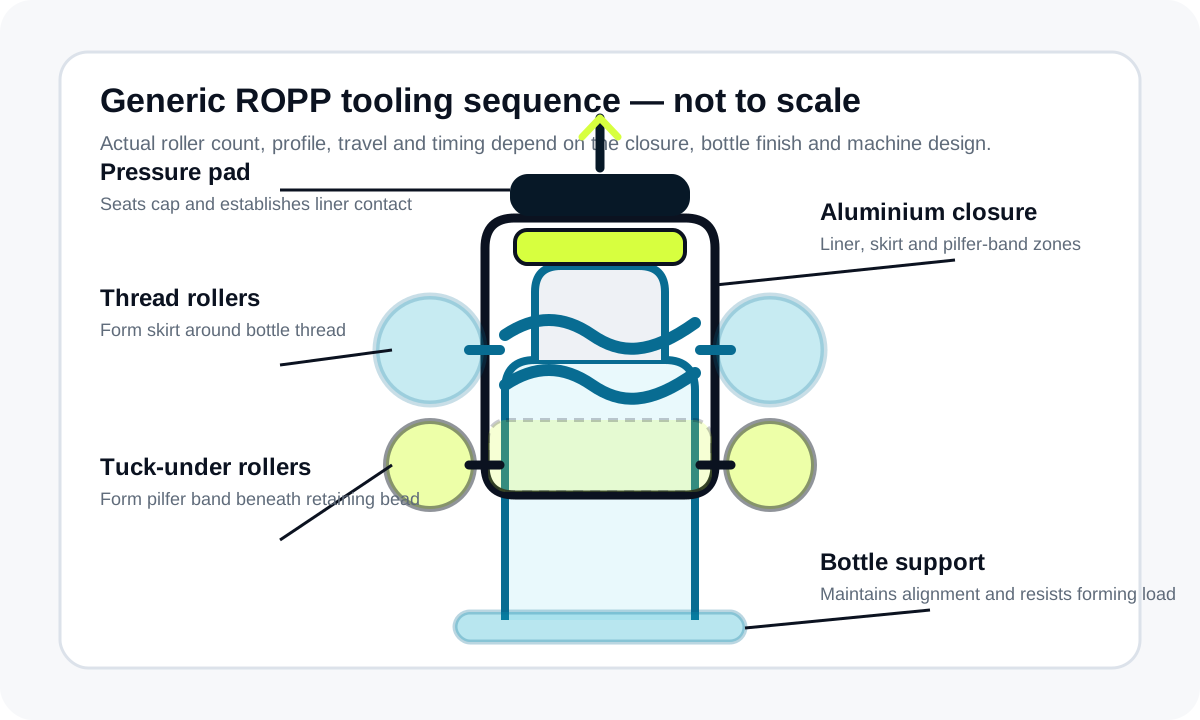
ROPP capping uses vertical compression and forming rollers. The smooth or partly formed aluminium shell is shaped against a compatible bottle finish so the thread and lower tamper-evident feature are created during application. A conventional screw capper engages a pre-threaded closure and rotates it to an application condition.
The two processes can look similar to a buyer because both finished packs unscrew. They require different heads, tooling, set-up evidence and fault diagnosis. Send the closure drawing or clear inside/outside images before requesting a machine.
Selection matrix
| Decision area | ROPP capper | Screw capper |
|---|---|---|
| Incoming closure | Compatible aluminium shell designed to be formed on the specified bottle finish. | Pre-threaded closure designed to engage the bottle thread. |
| Primary head action | Top pressure plus thread and pilfer-band forming rollers. | Rotational tightening by chuck, spindle or another torque-applying head. |
| Bottle requirement | Neck finish matched to the ROPP closure and forming process. | Thread finish matched to the pre-threaded closure. |
| Main tooling evidence | Pressure pad, roller profile/setting, bottle support and pilfer-band tooling. | Chuck or gripper interface, torque control, spindle/chuck set-up and bottle restraint. |
| Quality checks | Cap height, liner contact, formed thread, band/bridges, opening and leak performance. | Cap seating, application/opening behaviour, thread engagement, tamper ring and seal performance. |
| Common wrong-machine risk | Trying to tighten a shell that must be formed. | Trying to roll a closure whose thread is already moulded or formed. |
Project implications
An operator can place the cap and bottle before the head forms the closure. This supports trials, controlled batches and formats where manual inspection is valuable.
The system adds bottle transfer, cap orientation, cap placement, capping and line controls. Packaging stability and the cap-feed interface become critical.
Where the closure is tightened rather than formed, use a specialist screw-capping review instead of adapting ROPP tooling.
Sample review
Two closures can have a similar aluminium appearance but different internal construction and application instructions. Provide the supplier reference, cap drawing, bottle finish and production samples. If the closure includes an insert or pourer, show how that component is supplied and seated.
During a sample trial, confirm that the selected process produces the intended liner contact, thread, tamper feature, opening behaviour and seal result. Use the sample-trial guide and quality-inspection guide to record the decision.
Buyer questions
Some projects may support changeable technologies, but the heads, controls and handling requirements differ. Suitability must be confirmed from the actual closures and required formats.
The intended thread is formed against the bottle finish during application. Refer to the closure supplier’s drawing for the exact shell construction.
Both technologies can use tamper-evident features. The correct choice is the process specified for the closure and bottle system, followed by the applicable quality checks.
No. Identify the closure construction and application instructions first. Opening measurements are quality evidence, not a substitute for the drawing.
Send the cap drawing, bottle finish and physical samples for a technology review before machine selection.