
What fails?
Identify the exact assembly and the observable fault or quality effect.
Separate format-specific change parts, condition-based wear items and downtime-critical spares, then link every item to the actual machine design, failure consequence and quality check after replacement.
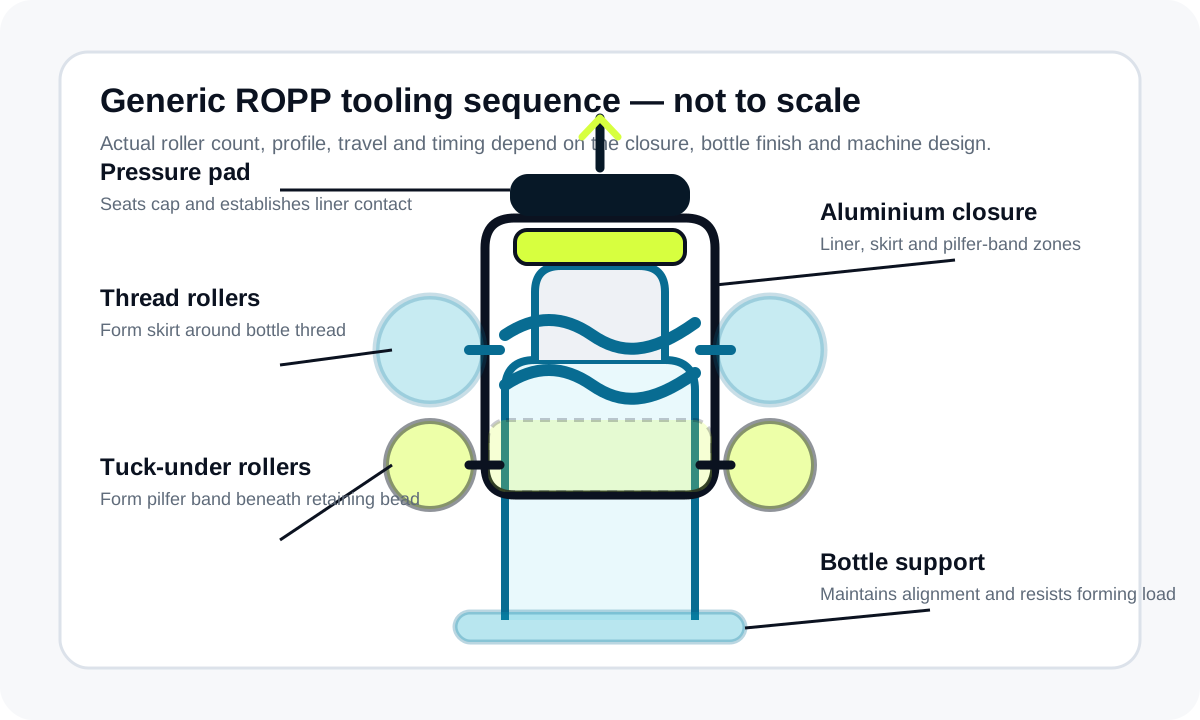
Direct answer
A useful spares plan covers the capping head, bottle handling, cap feed, sensors, drives, guarding and controls that are within the machine scope. It is based on the supplied machine and operating environment, not a generic shopping list. The plan should also identify storage, part revision, replacement skill and the quality checks required after work.
Parts categories
| Category | Purpose | ROPP examples that may apply |
|---|---|---|
| Change parts | Adapt the machine to another bottle or closure. | Guides, supports, starwheels, pockets, cap tracks, chutes or format tooling. |
| Wear parts | Maintain condition where motion, contact or service causes deterioration. | Roller-related components, bearings, springs, seals, guides, belts or contact surfaces as specified. |
| Critical spares | Restore operation after a failure that creates unacceptable downtime. | Sensors, drives, control components, feeder parts or head assemblies selected from the actual design. |
| Consumables | Support scheduled maintenance or approved cleaning/lubrication. | Only manufacturer-approved items documented for the machine. |
Criticality review
Identify the exact assembly and the observable fault or quality effect.
Distinguish reduced output, quality hold and complete machine or line stoppage.
Include the tools, data and skill needed to identify the failed part.
Consider supplier lead time, local stock and access to the machine.
Identify whether the task needs trained maintenance, machine supplier or tooling support.
Define first-off and quality checks after the part is replaced.
Blank spares register
The register is intentionally blank and does not prescribe stock quantities. Populate it from the machine manual, supplier recommendation, site criticality and operating experience.
Maintenance questions
A change part adapts the machine to another bottle or cap format. A wear part is inspected or replaced because service affects its condition. A spare part is held to restore operation after failure or damage. One component can fall into more than one planning category, so use the machine-specific parts list.
The inspection should cover the components that apply top pressure, form the thread and create the pilfer band, together with bearings, springs, seals, fasteners and adjustment features specified by the machine manufacturer. Use the manual and accepted samples to identify deterioration before quality drifts.
Yes for an automatic system. Feeder, chute, escapement, transfer, sensor and drive faults can stop accepted output even when the capping head is healthy. Include the complete cap path in the criticality review and separate format-specific feed parts from normal wear and failure spares.
Rank parts by failure consequence, expected wear, lead time, ability to diagnose the fault, availability of a temporary workaround and whether replacement requires specialist set-up. Confirm the list with the supplier and site maintenance team, then store parts with clear identity and preservation controls.
Ask Lancing to identify format, wear and critical items for the actual capper and cap-feed arrangement.
Parts identification
A description such as “ROPP roller” may not identify the correct item. Record the machine model and serial number, capping-head or station identity, drawing or part number, closure format, photographs, dimensions where authorised and the reason replacement is proposed. Keep removed parts until the cause and fit have been confirmed.
Replacing a wear part should be followed by the same controlled set-up and finished-pack checks needed to release the approved bottle and closure.
Use the service checklist to organise part identity, pack references, symptoms, recent changes and the required post-work verification.