
How should a ROPP capping changeover be validated?
A changeover is not complete when the parts are fitted; the new format must be traced, set, checked on first-off samples, proven through the connected line and formally released.
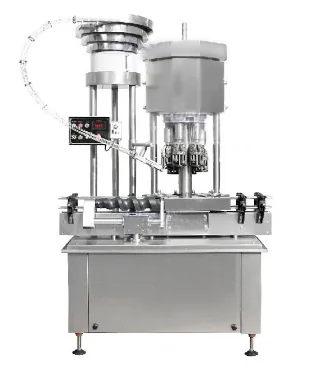
Direct answer
A ROPP changeover is complete only when the new format has been set, checked and formally released.
Validation should confirm the correct tools and packaging, recorded settings, cap feed, bottle support, first-off samples, required finished-cap tests and connected-line behaviour. The release record should identify who completed the change, who approved it and what production is covered.
The depth of validation depends on the change and product risk; it is not a universal fixed sample count.
Release sequence
Validate the format in eight controlled steps.
Complete line clearance
Remove previous bottles, caps, labels, records and loose format parts according to the site procedure.
Verify tooling identity
Check every head, guide, support, starwheel, cap track, chute and format component against the approved list.
Load the approved settings
Use the controlled recipe or set-up sheet and record any permitted adjustment.
Confirm packaging identity
Match bottle and closure lots and drawing revisions to the released format.
Run slow and observe
Confirm cap placement, bottle stability, head motion, thread and band formation before increasing output.
Approve first-off samples
Complete the required visual, dimensional, opening, seal and tamper checks.
Test connected-line behaviour
Check normal flow, starvation, blockage, stops, restarts and reject control.
Authorise production
Record the result, approver, retained samples and any temporary action or restriction.
Validation depth
Match the evidence to the change.
| Change | Minimum question | Possible additional evidence |
|---|---|---|
| Repeat approved format | Were the correct parts, settings and packaging restored? | First-off and routine format checks. |
| Different approved bottle or cap | Does the format record cover this exact combination? | Head samples, feed behaviour and connected-line checks. |
| New supplier or drawing revision | Has the packaging change been technically reviewed? | Trial, comparison samples and revised approval. |
| Tooling or control modification | Can the change affect forming, handling or detection? | Defined revalidation and updated documentation. |
| Significant maintenance | Can replaced or adjusted parts change cap quality? | Head-specific checks and operating-window confirmation. |
Blank changeover record
Record the format, evidence and release decision.
The blank record provides a structure for tooling identity, packaging, settings, first-off checks, line behaviour and approval. Adapt it to the site quality system.
Format questions
Questions about validating a ROPP capping changeover.
Is a completed mechanical changeover enough to release production?
No. Mechanical completion only shows that parts and settings have been changed. Production release should also confirm line clearance, correct packaging and recipe, cap feed, bottle handling, first-off samples, required opening and seal checks, tamper-band condition and connected-line behaviour.
What is a first-off sample after ROPP changeover?
A first-off sample is an identified bottle or sample set produced after the new format is set and before routine production is released. It should be linked to the format, settings, head or station, packaging lots, time, operator, checks and approval decision.
How should settings be recorded when several cap sizes are run?
Use a controlled format record for each approved bottle and closure combination. Record tooling identity, mechanical positions, approved recipe or settings, feeder parts, guide positions, checks and retained reference samples. Avoid relying on unverified marks or operator memory.
When should a changeover be revalidated?
Revalidation should be considered after a new bottle or closure, drawing revision, tooling or control change, significant maintenance, recurring quality fault or another change that can affect the approved result. The quality owner should define the extent based on risk and change control.
Design changeover and release around the real format range.
Send the current and planned bottles, caps and line arrangement so tooling and validation needs can be reviewed together.