
Visual and dimensional
Cap height, squareness, thread form, skirt, band, bridges, decoration and bottle damage.
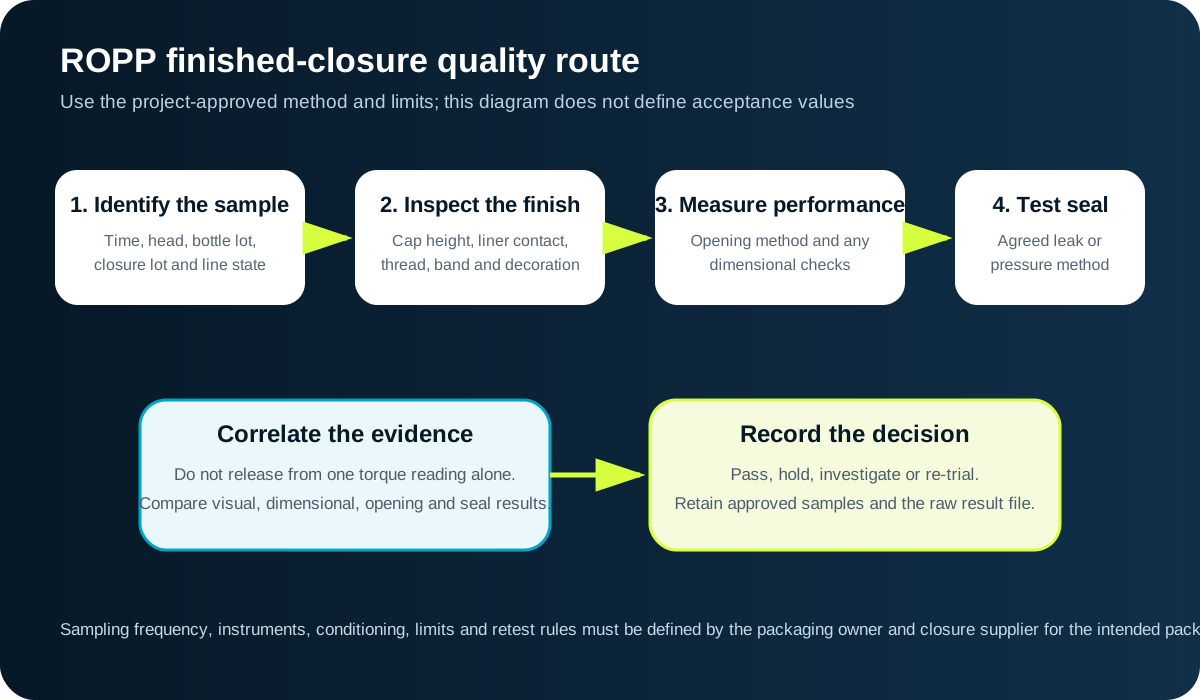
A useful plan combines packaging identity, first-off approval, head-specific and in-process checks, changeover and stop controls, retained samples, traceable records and a defined response to non-conforming bottles.
Direct answer
The plan should combine visual and dimensional cap inspection with the opening, seal and tamper checks that matter for the actual product. It should identify which heads and packaging lots are sampled, how results are recorded, who can adjust or release the machine and what happens to bottles produced since the last accepted check.
Limits and frequency belong to the approved packaging and quality system; this guide does not invent them.
Control plan
| Control point | Typical evidence | Release or action |
|---|---|---|
| Incoming packaging | Supplier reference, lot, drawing revision, visible damage and agreed dimensions. | Release, quarantine or supplier review. |
| Start-up / first-off | Correct format, settings, head samples, visual finish, opening, seal and band checks. | Authorised first-off approval before routine output. |
| In-process | Samples across heads and time, cap feed, stops, rejects and test results. | Continue, adjust under control or hold affected production. |
| Changeover | Line clearance, tooling identity, recipe, first-off and connected-line confirmation. | Format-specific release. |
| Unplanned stop / adjustment | Time, reason, affected quantity, setting change, recheck and disposition. | Segregate and re-release under the quality plan. |
| End of run | Final checks, retained samples, deviations, rejects and reconciliation. | Batch or run close-out. |
Complementary checks
Cap height, squareness, thread form, skirt, band, bridges, decoration and bottle damage.
Defined opening method, tamper evidence, user feel and reseal behaviour where required.
The agreed leak, pressure, storage or product-specific test under defined conditions.
Samples identified by capping head or station so local faults can be separated from pack variation.
Bottle mould or lot and cap lot so supplier variation can be investigated.
Cap starvation, stops, restarts, jams, rejected bottles and downstream handling.
Blank production record
The downloadable CSV provides fields for packaging identity, head or station, settings, checks, decision and corrective action. The quality owner must adapt it to the actual product and approved methods.
Production questions
Start-up checks should confirm the correct bottle, cap, liner and format parts; approved settings; cap feed and bottle handling; first-off visual finish; opening behaviour; required seal or leak checks; tamper-band condition; and traceability to the head, packaging lots, operator and time.
There is no universal interval. Sampling frequency should be defined by the product and packaging risk, line behaviour, head count, process capability, legal or customer requirements and the ability to detect a fault before a large quantity is affected. The quality owner should approve and review the plan.
Identify and hold the potentially affected bottles, record the reason and time, restore the approved setting, produce new first-off samples and repeat the checks relevant to the change. Do not blend unverified bottles back into accepted production without a defined disposition.
A traceable record links each result to the product, bottle and cap lots, drawing revisions, line and machine, capping head or station, settings or recipe, date and time, operator, test instrument and method, result, acceptance decision and any corrective action.
Send the packaging specification, required tests and line arrangement so the machine trial can produce usable evidence.
100% visible checks
Use automatic inspection when a clearly defined visible or measurable fault should be checked on every presented bottle. Record how the bottle is stabilised, how a result remains linked to that bottle, how failure is rejected and confirmed, and what happens if tracking or containment becomes uncertain.
Automatic inspection complements rather than replaces sampled opening, leak, liner, insert and other functional tests unless a validated method directly measures the required property.