
Compare by capping head
On multi-head machines, label samples by head and plot or review results separately. Investigate one head that trends differently before changing common machine settings.
Opening torque is one of the most useful measurements in ROPP capping. It helps indicate whether the cap has been formed too lightly, too aggressively or inconsistently across bottles and machine heads.
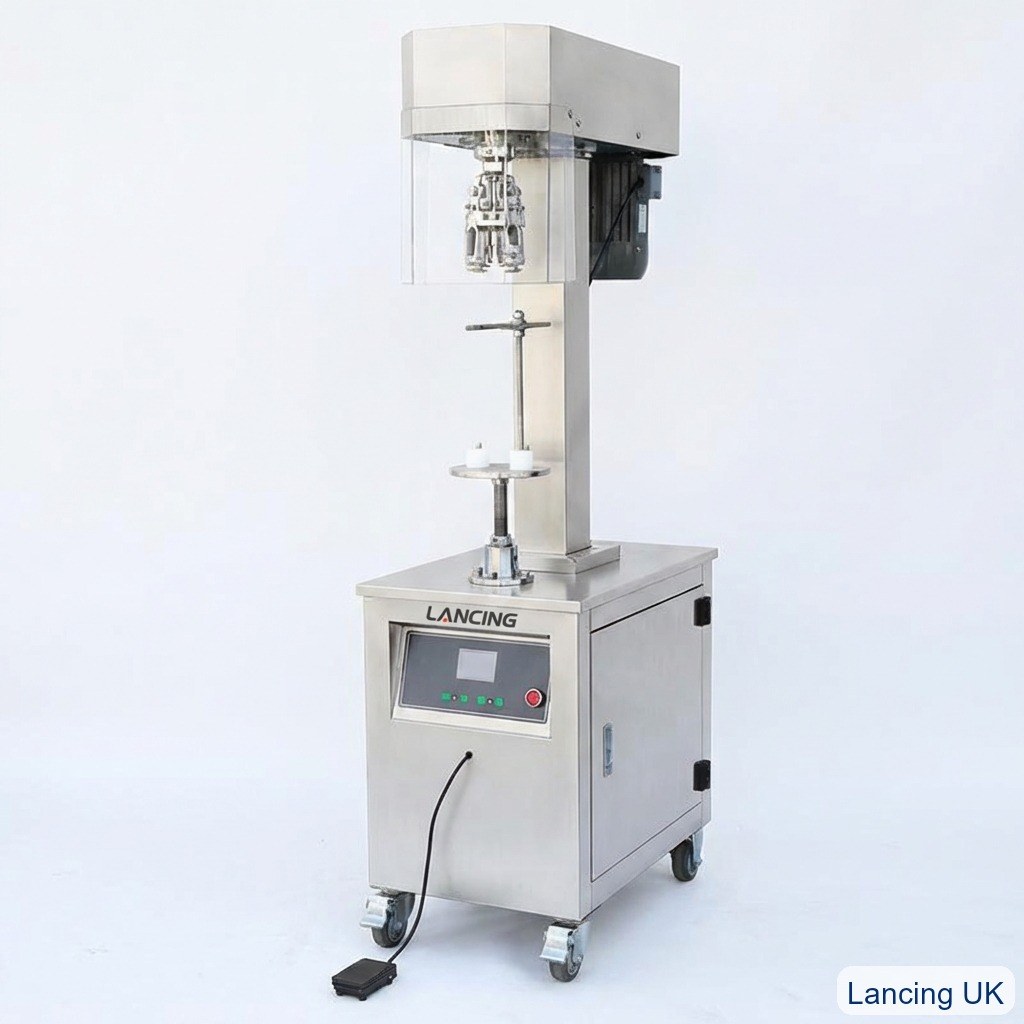
Torque measurement
A torque number is useful only when linked to leak testing, tamper band quality, consumer opening feel and closure supplier guidance. The target should be set for the specific bottle, cap, liner and product rather than copied from an unrelated pack.
For best results, treat the cap, bottle and machine as one system. Lancing UK can review samples and advise whether a semi-automatic, inline automatic or rotary multi-head ROPP capping system is the correct route.
Selection table
Use these checks to narrow the machine choice and avoid packaging compatibility problems.
| Area | Why it matters | Action |
|---|---|---|
| High opening torque | Hard-to-open pack and possible over-compression | Review top pressure, thread and band rollers |
| Low opening torque | Risk of weak seal or poor reclose feel | Check thread formation and cap height |
| Variable torque | Inconsistent samples or machine setup | Track head number, batch and operator handling |
Process
A documented setup gives better repeatability and easier troubleshooting.
Define the product-specific target range.
Cap enough samples across speed and all heads.
Allow any required settling time before measurement.
Record opening torque and visual condition.
Retain approved samples for future production comparison.
Related ROPP guidance
These pages cover machine range, automatic options, troubleshooting and the enquiry route for bottle and cap samples.
FAQ
There is no universal value. The target depends on cap, bottle, liner, product, customer requirement and closure supplier guidance.
Immediate testing can be useful, but some projects also test after storage or conditioning because liners and product residues can change opening feel.
Yes. If the cap is difficult to open, customers may see the pack as faulty even when it does not leak.
Not always, but low torque can indicate weak thread formation or insufficient seal compression and should be checked alongside leak testing.
Send your cap size, bottle height, neck finish, samples and target output for practical advice.
Repeatable method
Opening torque is useful only when the test method is controlled. Instrument, sample temperature, conditioning time, opening direction, operator technique and the point at which the value is captured can all change the result.
| Method field | What to define | Why it matters |
|---|---|---|
| Instrument | Meter or tester identity, range, calibration status, fixtures and the manufacturer's operating method. | Different equipment and fixtures can produce results that are not directly comparable. |
| Sample condition | Bottle/cap lots, filled or dry condition, storage orientation, temperature and time between capping and test. | Liner behaviour, product residue and conditioning can change opening performance. |
| Sampling | Number and timing of samples, every capping head where applicable, start-up, steady running and after a stop. | Prevents a stable average from hiding one head or one operating condition. |
| Measurement | Opening direction, fixture alignment, operating rate and whether peak or another defined value is recorded. | Controls how the result is generated and interpreted. |
| Companion checks | Cap height, thread and band appearance, bridge break, leak method, cap finish and bottle damage. | Torque alone does not prove seal integrity or acceptable tamper evidence. |
| Acceptance | Project-specific target source, pass/fail rule, retest rule and sign-off owner. | Separates an agreed packaging requirement from an arbitrary generic number. |
Pack performance
A high value can result from excessive liner compression, friction, thread formation or band interference. A low value can coincide with weak thread definition or insufficient seal contact, but neither outcome can be diagnosed from torque alone.
On multi-head machines, label samples by head and plot or review results separately. Investigate one head that trends differently before changing common machine settings.
Keep bottle and closure lot identity. A change in liner, lacquer, neck finish or dimensional tolerance can shift opening performance without a machine adjustment.
Use the approved leak or storage test on an identified companion sample set. The combination of torque, appearance and leak performance gives a stronger approval basis.
The closure supplier or customer quality standard should own the target and test boundary. The machine trial should demonstrate that the capper can produce packs within that agreed method using representative samples. For the packaging interface, use the neck-finish guide; for faults, use ROPP troubleshooting.
Method FAQ
Only after the method, range, fixtures, calibration and operating procedure have been shown to be equivalent. Otherwise retain each method as a separate data set.
Liners, product residue and packaging materials can settle or change after application. Recording the interval makes immediate and conditioned results distinguishable.
Yes for multi-head equipment. Head-by-head samples are needed to identify local variation that an overall average may hide.
No. Use the agreed leak or storage method as a separate acceptance check and interpret it with the visual condition of the liner, thread and tamper band.
The target should be controlled by the packaging and quality requirement, using closure/bottle supplier guidance, customer standards and validated pack performance rather than a generic web value.
Send the closure, bottle, target source and existing test method so the trial record can match production QA.
Raw-data interpretation
An overall average can hide one capping head, one packaging lot or one operating state that behaves differently. Retain the individual readings and the visual and leak observations for the same identified sample sequence.
| Data field | Record for each sample or sample group | Question the evidence can answer |
|---|---|---|
| Sample identity | Unique number, time, machine, format, capping head and start/steady/restart state. | Is the difference local to one head or linked to a line event? |
| Packaging identity | Bottle, cap, liner/insert and product lot, plus filled or dry condition. | Does the result follow a normal packaging or product change? |
| Test condition | Instrument, fixture, calibration reference, sample temperature, conditioning time and opening method. | Are the results genuinely comparable? |
| Opening result | Raw reading using the defined capture point, without replacing individual values with only a mean. | What is the spread and does one sequence trend differently? |
| Companion observations | Cap height, thread, band, bridge, liner contact, cap finish, bottle damage and leak result. | Does opening behaviour agree with the physical and seal evidence? |
| Disposition | Pass, fail, quarantine, retest or engineering review according to the approved site procedure. | Was the decision made against the controlled project requirement? |
No universal target is introduced here: the acceptable range, test equipment, conditioning and decision rule must come from the approved bottle/closure specification, closure supplier guidance, customer requirement and validated finished-pack performance.
Nonconformance route
A failed opening result can be caused by top load, thread formation, tuck-under interference, cap or liner friction, product residue, bottle finish variation, test method or sample conditioning. The corrective route should identify which evidence changed before the machine is adjusted.
Confirm instrument and fixture, calibration status, sample alignment, opening direction, capture definition, time after capping and sample temperature. Separate immediate and conditioned results rather than mixing them.
Inspect sealing land, cap height, liner, thread form, pilfer band, bridges and decorative finish. Compare the bottle and closure lots with retained approved samples and the controlled drawings.
Review results by head, time and line state. A single-head pattern should not be corrected by changing a common setting until the local tooling, alignment and wear evidence has been examined.
Define who may authorise a retest, whether the original result remains in the record, what sample set is required and which conditions must remain unchanged. A retest should confirm a documented cause or correction, not erase an unexplained failure.
Use the approved leak or storage method on a traceable companion set and review the band and bridge condition after opening. For combined fault diagnosis, continue to ROPP troubleshooting; for the bottle interface, use the neck-finish guide.
The downloadable CSV records sample, head, lot, conditioning, opening, leak and visual fields without imposing unsupported pass values.