
Parts
Identify head/tooling, cap-feed parts, guides, supports, starwheels and fasteners by format.
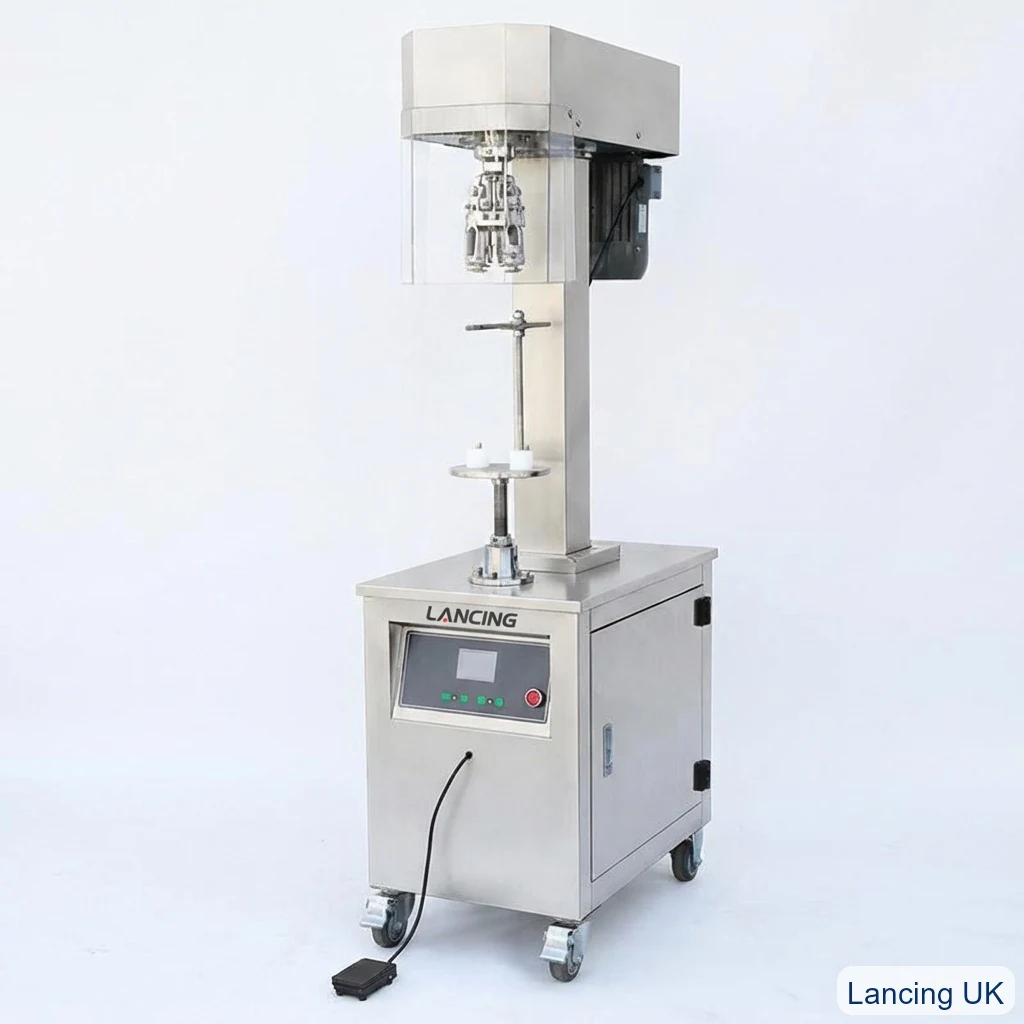
Running multiple ROPP cap sizes or bottle formats is possible on many machines, but the changeover needs to be planned. Cap diameter, cap height, bottle neck finish, guides and cap feed parts all affect the setup.
Changeover planning
A machine specified for one bottle size can be simpler than a machine required to run many formats. If multiple caps are needed, the tooling, head settings, bottle guides and cap feeding system must be considered early.
Operators should have a documented changeover sheet for each format, including head height, roller positions, bottle guide settings and pass/fail checks for torque, leakage and tamper-band appearance.
Specification guide
These areas commonly need adjustment or replacement during format changes.
| Area | Why it matters | Action |
|---|---|---|
| Bottle guides | Bottle stability | May need adjustment for diameter and shape |
| Capping head | Cap forming quality | May need head height and roller setting changes |
| Cap feeder | Cap presentation | May need bowl, track or chute change parts |
Process
These steps help turn the search query into a working ROPP capping specification.
List all bottle and cap formats.
Group similar formats where possible.
Define change parts and settings.
Create operator setup sheets.
Validate every format after changeover.
Related ROPP guidance
These pages cover the wider equipment range, technical checks and the enquiry route for samples and quotations.
FAQ
Often yes, but it depends on the machine, capping head, cap feeder and bottle handling system.
Guides, starwheels, cap feed parts and capping head components may be required.
Group similar formats, use documented settings and design the machine around planned formats.
Yes. Each bottle and cap combination should be checked after setup.
Send your cap size, bottle height, neck finish, samples and target output for practical advice.
Format release
A repeatable changeover uses identified parts, controlled settings, a written sequence and a first-off release against approved samples. It also defines what can be adjusted by an operator, what requires an authorised setter and which quality checks must pass before routine production resumes.
Identify head/tooling, cap-feed parts, guides, supports, starwheels and fasteners by format.
Record labelled positions, head height, top load, roller positions and line speed/recipe.
Use retained visual standards plus the agreed opening, leak and tamper-band checks.
A changeover record should connect the correct parts, the approved format and the evidence required to resume production. Use photographs or clearly labelled references for parts that look similar, and show where the controlled setup information is kept. Avoid relying on a remembered adjustment from the previous run.
When timing a changeover, define its start and finish. Include the agreed first-off checks and any cap-feed or conveyor work required for the new format. This creates a fairer comparison than measuring only the time spent adjusting the capping head.
State the definition clearly; a production-ready comparison should include the checks needed before normal output resumes.
Only where the approved format information supports that approach; keep differing closure and bottle details visible.