
Short-run ROPP capping machines for trials, launches and flexible production.
Short-run ROPP capping often needs flexibility more than maximum speed. A table-top or semi-automatic capper can support product launches, laboratory work, contract packing and small-batch production.
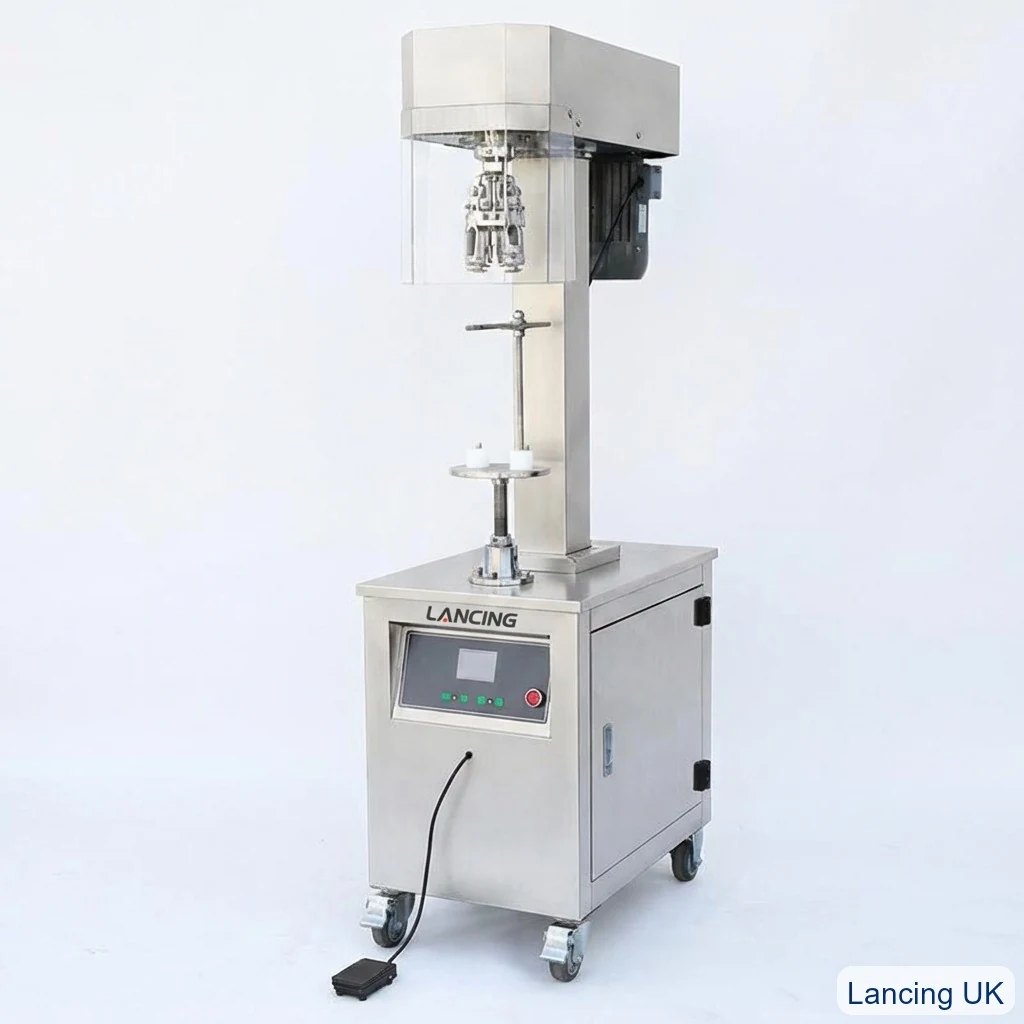
Flexible setup
A low-volume capper still needs proper closure forming.
Even at low speed, the cap must seal correctly, open at the right torque and create a clean tamper band. The machine should therefore be selected from real caps and bottles, not only from stated diameter.
Short-run machines are particularly useful when production involves multiple customer formats, early-stage product launches or frequent changeovers that do not justify a fully automatic cap feed system.
Short-run project inputs
- Typical run length
- Number of formats
- Cap and bottle samples
- Manual cap placement tolerance
- Operator skill level
- Torque and leak-test needs
- Bench or pedestal format
- Future automation plans
Specification guide
Short-run ROPP options
Choose the simplest machine that still gives repeatable quality.
| Area | Why it matters | Action |
|---|---|---|
| Table-top unit | Trials and very small batches | Compact, flexible and low complexity |
| Pedestal semi-auto | Short production runs | More robust handling and operator workflow |
| Entry automatic | Repeated short runs | Useful where manual handling becomes the bottleneck |
Process
Practical route from enquiry to production.
These steps help turn the search query into a working ROPP capping specification.
1. Define run length and formats
Define run length and formats.
2. Check samples and cap sizes
Check samples and cap sizes.
3. Choose bench or pedestal machine
Choose bench or pedestal machine.
4. Create setup sheet
Create setup sheet.
5. Validate with torque and visual checks
Validate with torque and visual checks.
Related ROPP guidance
Continue the machine-selection process.
These pages cover the wider equipment range, technical checks and the enquiry route for samples and quotations.
FAQ
Questions about short run ropp capping machine.
What is the best ROPP capper for short runs?
Often a table-top or semi-automatic unit, depending on bottle size, cap type and operator workflow.
Can short-run machines produce saleable packs?
Yes, if they are correctly specified and set up with suitable caps and bottles.
Do low-volume packs need torque checks?
Yes. Quality checks matter even when output is low.
Can I upgrade later?
Many businesses start with semi-automatic capping and move to automatic equipment as volumes increase.
Need help with this ROPP capping requirement?
Send your cap size, bottle height, neck finish, samples and target output for practical advice.
Short-run evidence
What should a short-run ROPP trial record?
Record the packaging lot, cap placement method, bottle support, tooling and settings, first-off approval, good bottles, rejects, interruptions and the finished-cap tests. Short batches can be dominated by setup and inspection, so separate preparation time from accepted production output.
| Stage | Evidence |
|---|---|
| Set-up | Approved format, tooling, settings, first-off sample and operator release. |
| Run | Batch quantity, accepted bottles, rejects, pauses and inspection frequency. |
| Close | Final sample, remaining components, setting changes, cleaning and next-run action. |
Compare short-run capping by the work required per batch
For a short run, describe the whole batch rather than only the closing cycle. Include loading components, preparing the format, producing first-off samples, completing the run and clearing the equipment for the next job. This helps compare a compact route with a more automated arrangement on the work you actually perform.
List how often the same bottle-and-cap pairing returns. A repeat order with a controlled setup record presents a different planning task from a succession of new customer packs. Show which formats are established and which require fresh trials before committing them to a production schedule.
- Batch pattern
- Provide typical order sizes and changeover frequency, separating recurring packs from new product development work.
- Operator tasks
- Identify cap placement, bottle loading and finished-pack checks that remain with the operator in each proposed route.
- Future route
- Describe possible growth as a separate requirement and ask what would change in feeding, handling or tooling.
Is the fastest machine always the best short-run choice?
Compare preparation, changeovers, operator work and accepted output across the whole batch, not only the nominal cycle.
What trial information is useful for repeat work?
Retain the approved component references, setup record and finished samples so later batches have a clear starting point.