
Pack compatibility
Use supplier data and controlled tests for the actual product, concentration, temperature and contact time.
Chemical products can place extra demands on bottle capping because of product compatibility, residue, leakage risk and operator handling. The capper should be specified using real samples and clear safety requirements.
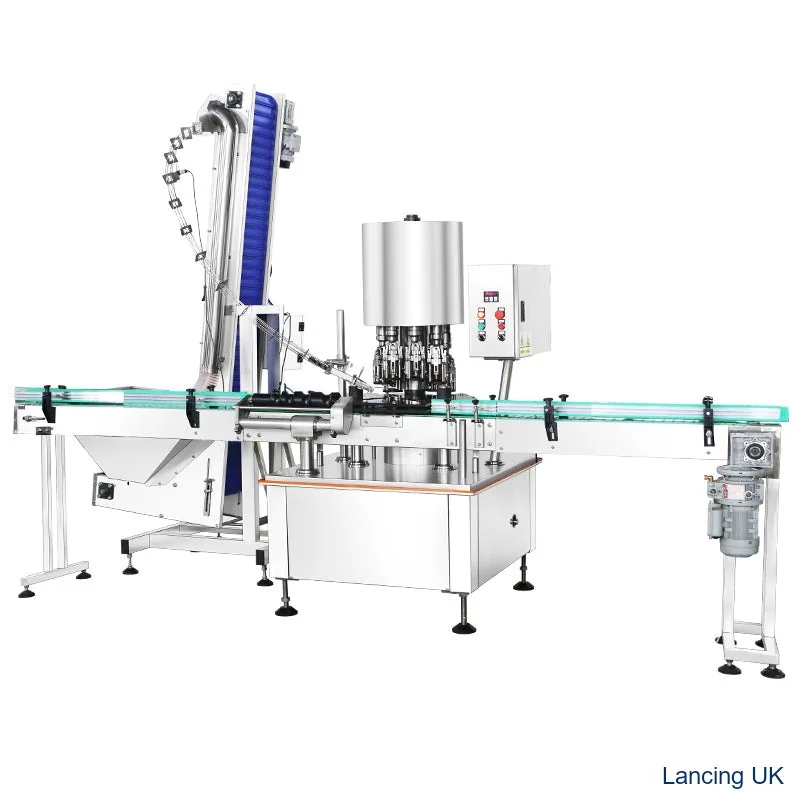
Product compatibility
Chemical packaging may require attention to cap liner compatibility, product residue around the neck, fumes, cleaning methods and operator access. In some cases, filling accuracy and drip control affect the quality of the final cap seal.
Before quoting, Lancing UK can review whether the bottle and aluminium cap are suitable for ROPP capping and whether the line needs additional handling, guarding or extraction considerations.
Specification guide
These issues should be reviewed before machine selection.
| Area | Why it matters | Action |
|---|---|---|
| Product residue | May affect sealing | Review filling and neck wiping needs |
| Chemical compatibility | Affects liner and materials | Confirm cap liner and machine material suitability |
| Operator exposure | Affects guarding and layout | Review safety and access requirements |
Process
These steps help turn the search query into a working ROPP capping specification.
Review product and pack samples.
Confirm compatibility and safety needs.
Select capping format.
Plan guarding and handling.
Validate seal and leak performance.
Related ROPP guidance
These pages cover the wider equipment range, technical checks and the enquiry route for samples and quotations.
FAQ
It can be used for suitable chemical products and packaging, but compatibility and safety must be reviewed.
Residue on the neck can affect liner compression and seal quality.
That depends on the product risk, filling process and operator access needs.
Where leakage risk matters, leak testing or equivalent QA checks should be planned.
Send your cap size, bottle height, neck finish, samples and target output for practical advice.
Application-specific evidence
Verify product compatibility with the bottle, liner, closure and any wetted or exposed machine materials; define fill and neck-cleanliness conditions; and use the product owner’s leak, storage and transport requirements. Machine suitability, ventilation and hazardous-area duties remain application-specific and must not be inferred from a general capper description.
Use supplier data and controlled tests for the actual product, concentration, temperature and contact time.
Define conditioning, orientation, leak method, opening method and acceptance authority before the trial.
Confirm cleaning, spill control, ventilation, area classification and safe maintenance with competent site specialists.