
Machinery supply
Define the supplied machine or assembly, intended use, limits, safeguards, instructions, technical documentation and applicable conformity route.
Define the machine boundary, hazards, safeguards, access, isolation, integration responsibilities and handover evidence for the actual ROPP capper and connected line.
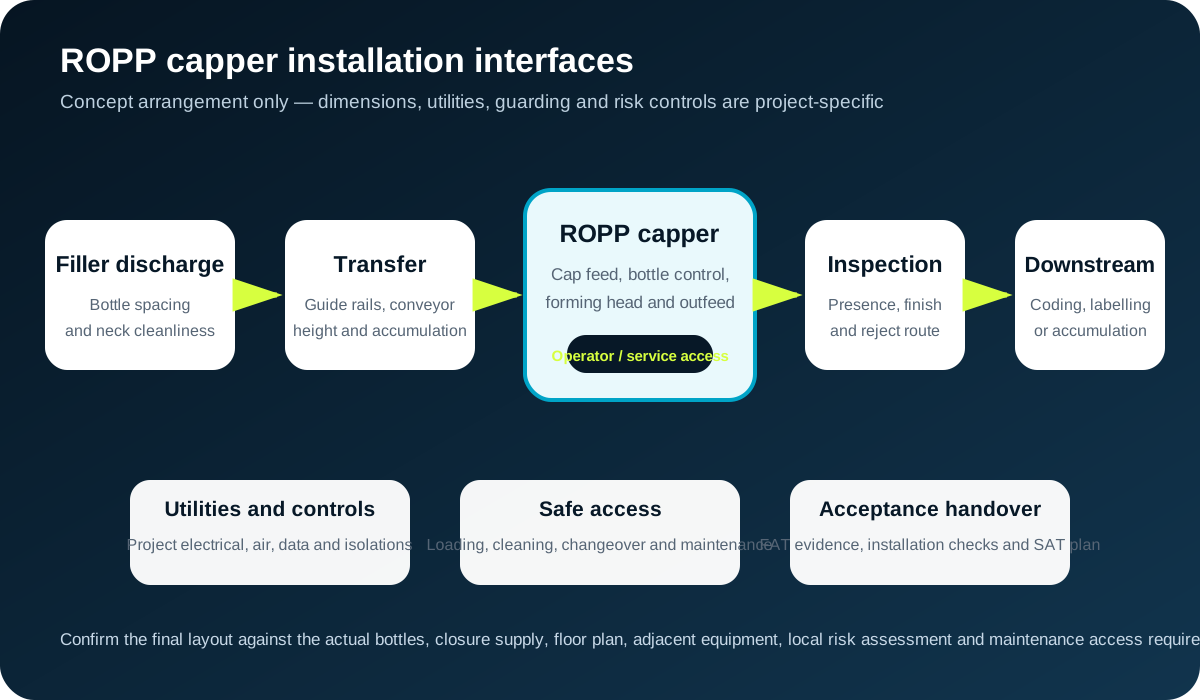
Answer first
It requires an application-specific risk assessment and risk reduction process covering intended use, foreseeable misuse, dangerous movements, cap and bottle handling, guards or protective devices, controls, emergency stopping, isolation, access, instructions and maintenance. The final installed assembly and workplace use must be reviewed, not inferred from a website photograph.
This page is general project guidance, not a risk assessment, conformity decision or substitute for the supplied instructions. Requirements depend on the selected machine, connected equipment, product, site and modifications.
Project responsibilities
The responsible organisations and documents depend on what is supplied and how it is installed or modified.
Define the supplied machine or assembly, intended use, limits, safeguards, instructions, technical documentation and applicable conformity route.
Assess hazards created by conveyors, feeders, guarding interfaces, shared controls, emergency stops, access openings and combined operating sequences.
Ensure equipment is suitable, installed and maintained safely, inspected as required and used by trained people with appropriate protective measures and isolation.
Hazard review
| Area | Examples to assess on the actual equipment | Project evidence |
|---|---|---|
| Capping head/turret | Rotating or descending parts, trapping, crushing, drawing-in and access to rollers or tooling. | Risk assessment, guard/protective-device design, safe modes and validation. |
| Bottle and cap transfer | Starwheels, screws, belts, chutes, escapements, conveyors, pinch points and ejected components. | Guarding boundary, transfer tests, containment and access method. |
| Cap feeder | Moving bowl/elevator parts, jams, sharp closure edges, bulk loading and maintenance access. | Safe replenishment, jam-clearance method, isolation and instructions. |
| Stored energy | Electrical, pneumatic, spring, gravity or rotational energy remaining after stop. | Isolation points, lock-off method, dissipation/verification and maintenance procedure. |
| Cleaning/changeover | Access with guards open, tools, sharp edges, unstable bottles, removed parts and unexpected restart. | Authorised sequence, safe mode or isolation, part handling and competence. |
| Connected line | Remote start, accumulation forces, shared emergency stops, openings between guards and uncertain bottle state. | Interface risk review, control schedule and integrated validation. |
Risk reduction
First remove or reduce hazards through design where practicable. Then use guards or protective devices and safe control functions for remaining access risks. Provide information, markings, training and procedures for residual risks. Warnings and operator behaviour should not replace reasonably practicable design and safeguarding measures.
Guard openings, safety distances, interlocks, stopping performance and control-system integrity require project-specific engineering and validation against the relevant machine and current standards.
Operation and recovery
Prove guards/protective devices, bottle and cap flow, operator position, alarms and stop controls under the intended line condition.
State which parts and settings change, which energy sources are isolated and who is authorised to set and release the machine.
Provide a defined method for common bottle and cap jams without reaching into dangerous movement or bypassing safeguards.
Identify isolation, lock-off, stored-energy release, safe support, access and return-to-service checks.
Contain hazards, identify affected bottles, correct the cause, prove safeguards and authorise reset before production resumes.
Installation and handover
| Handover item | Confirm for the supplied project |
|---|---|
| Machine identity and boundary | Model/serial, supplied equipment, integrated assembly, exclusions and site additions. |
| Risk and safeguard evidence | Risk assessment status, guard/protective-device checks, safety-function validation and open actions. |
| Conformity and instructions | Applicable declaration, markings, instructions, drawings and assembly information as relevant. |
| Installation | Level/anchoring, utilities, isolations, connected equipment, access and site-specific risk review. |
| Training and competence | Named operators/maintainers, modes, first-off release, jam clearance, isolation and escalation. |
| Maintenance and inspection | Intervals, wear parts, safeguard checks, test equipment, records and responsible person. |
Buyer questions
No. Product-supply conformity and workplace use are related but separate responsibilities. The user still needs suitable equipment, safe installation and use, maintenance, inspection where required, training and appropriate protective measures for the actual workplace.
An emergency stop is a supplementary protective measure, not a substitute for preventing or controlling access to dangerous parts. The risk assessment and risk-reduction hierarchy determine the required safeguards.
The integration review should consider new trapping points, guard openings, shared controls, remote start, accumulation, emergency-stop boundaries and the behaviour of both machines during faults and restart. Record who owns each corrective action.
Routine bypass should not be assumed. Any required setting or diagnostic mode needs a risk-assessed method with appropriate reduced-risk controls, access restrictions, competence and validation for the actual machine.
Send the layout, equipment scope, operating modes, access needs, site interfaces and project documentation requirements for engineering review.