
Drawing check
Confirm the finish standard, dimensions, tolerances and any supplier revision.
Glass bottles are one of the most common formats for ROPP capping. The capper must match the glass neck finish, closure design and production speed while preventing cap skew, damage and inconsistent torque.
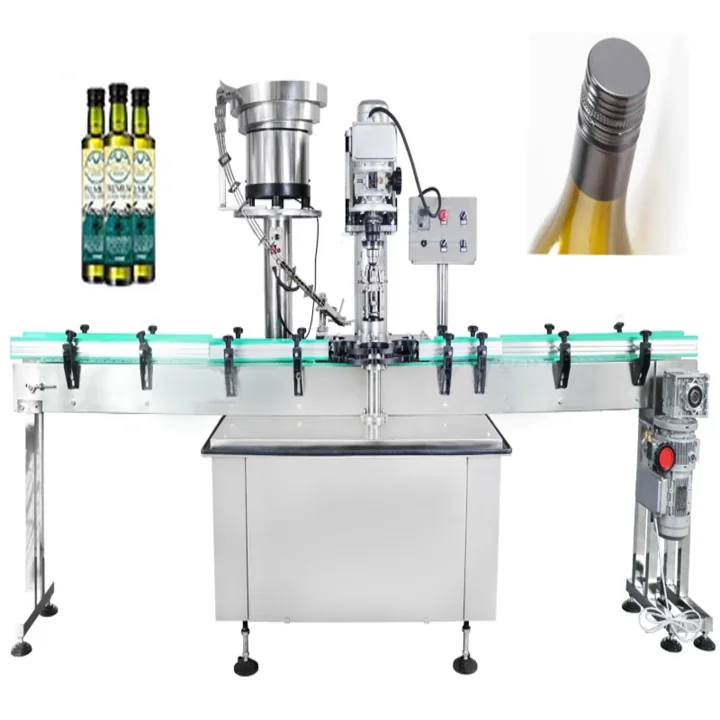
Glass compatibility
ROPP caps form around the bottle neck, so the glass thread, sealing surface and retaining bead need to be suitable. Variations in glass tolerance can affect thread formation and the final opening feel.
Glass bottles are often used for wine, spirits, oils, syrups and premium products. These applications also demand good cap appearance, so tooling setup should protect printed aluminium caps from scuffing.
Specification guide
These checks help avoid cap and seal defects.
| Area | Why it matters | Action |
|---|---|---|
| Neck finish | Controls cap forming | Confirm thread and bead geometry |
| Bottle stability | Controls cap alignment | Check guides, support and infeed control |
| Surface finish | Controls brand appearance | Inspect cap scuffing after trials |
Process
These steps help turn the search query into a working ROPP capping specification.
Check cap and glass samples.
Set bottle support and head height.
Form thread and band.
Measure opening torque.
Inspect leaks and cap appearance.
Related ROPP guidance
These pages cover the wider equipment range, technical checks and the enquiry route for samples and quotations.
FAQ
Yes, when the neck finish and cap are designed for ROPP closure forming.
Yes. Neck and height variation can affect cap formation and opening torque.
Wine, spirits, oils, syrups and premium beverage products commonly use glass bottles with ROPP caps.
Stable bottle control is important, especially for tall or narrow formats.
Send your cap size, bottle height, neck finish, samples and target output for practical advice.
Glass and finish evidence
Use controlled bottle and closure lots, measure the relevant neck-finish features, mark sample identities and cap them without mixing setting changes and component changes. Compare good and faulty samples by bottle, cap, head/station and setting so variation is traced rather than attributed to the machine by assumption.
Confirm the finish standard, dimensions, tolerances and any supplier revision.
Sample across representative pallets or lots and retain uncapped references.
Link cap seating, thread, band, opening and leak results to the identified bottle and closure.