
Bottle location
Check base contact, side support, neck access and repeatable centreline under the head.
Miniature bottles and small formats require careful handling because they have less body area for guides and may be sensitive to cap placement errors. ROPP capping can work well when the capper is set up for the exact bottle and cap samples.
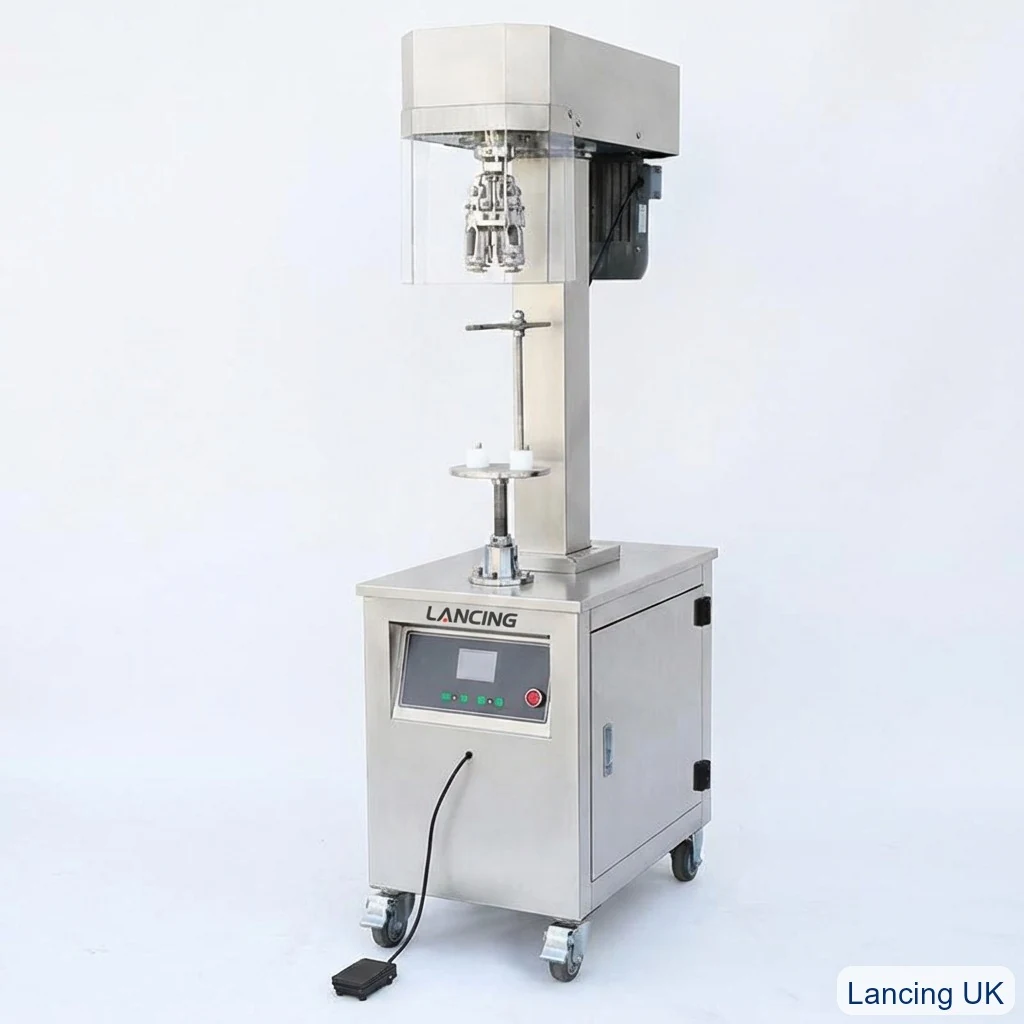
Small format handling
Miniature spirit bottles can be valuable, branded packs where cap appearance and tamper evidence matter. Because the bottle is small, even minor cap skew can be obvious or cause torque variation.
The machine should be tested with filled miniatures, production caps and the intended label/coding sequence so handling is realistic.
Specification guide
Small bottles magnify handling and alignment problems.
| Area | Why it matters | Action |
|---|---|---|
| Cap skew | Visible defect | Improve bottle support and cap placement |
| Bottle instability | Stops or damaged caps | Review guides and infeed control |
| Torque variation | Poor consumer experience | Validate head settings with production samples |
Process
These steps help turn the search query into a working ROPP capping specification.
Supply filled miniature samples.
Confirm cap and neck compatibility.
Set bottle support accurately.
Run cap appearance checks.
Measure torque and band break.
Related ROPP guidance
These pages cover the wider equipment range, technical checks and the enquiry route for samples and quotations.
FAQ
Yes, for suitable miniature bottles and aluminium caps, but sample testing is important.
It can be useful for lower-volume or varied miniature runs.
Their small size can make bottle location and cap placement more sensitive.
Potentially yes, but guides, starwheels or handling parts must be specified correctly.
Send your cap size, bottle height, neck finish, samples and target output for practical advice.
Small-format control
Small bottles can magnify instability, neck-height variation, guide clearance and cap-placement error. The trial should prove positive location, neck support where required, cap squareness, controlled top load, roller clearance and finished-cap quality without scuffing, tipping or bottle damage.
Check base contact, side support, neck access and repeatable centreline under the head.
Use representative decorated caps and observe tilt, edge damage and transfer into the tooling.
Retain close-up visual samples with opening and leak results for the approved setting.
For miniature bottles, describe the complete handling route rather than only the capping position. Show how the small packs are loaded, spaced, presented and removed. Include the filled weight and the normal decoration so the support review uses the pack that will actually run.
Agree how the trial records appearance and closing quality on these small formats. Photograph the same views before and after the run, and identify the bottle and cap lot. This helps reviewers distinguish a handling mark or incoming component issue from a change produced during capping.
It provides context, but the miniature pairing and its handling route should be reviewed on their own evidence.
Provide the miniature bottle and matching cap references, dimensions, filled weight and photographs of the intended finished pack.