
Bottle finish
Confirm the glass finish drawing, sealing surface, thread and relevant neck dimensions. Separate bottle lots when investigating a change in cap quality.
ROPP capping is commonly used on wine bottles where a clean aluminium screw-cap finish, tamper evidence and reliable resealing are required. Machine selection should consider bottle stability, closure decoration, line speed and the capper position after filling.
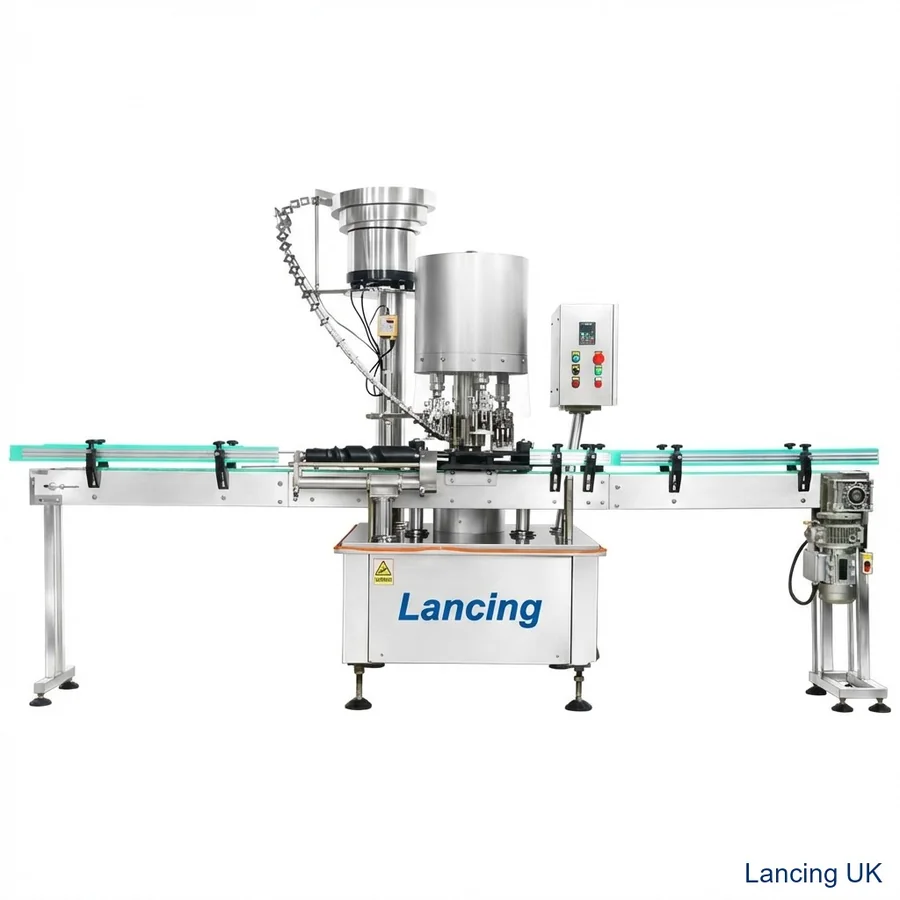
Wine production priorities
Wine projects often place high importance on cap appearance and smooth opening feel. The capper should control pressure and roller contact so the closure is formed accurately without scuffing the visible cap surface.
For best results, treat the cap, bottle and machine as one system. Lancing UK can review samples and advise whether a semi-automatic, inline automatic or rotary multi-head ROPP capping system is the correct route.
Selection table
Use these checks to narrow the machine choice and avoid packaging compatibility problems.
| Area | Why it matters | Action |
|---|---|---|
| Small winery batches | Semi-automatic ROPP capper | Flexible for lower-volume production and trials |
| Growing bottling line | Inline automatic ROPP capper | Supports conveyors and repeatable operation |
| High-output wine production | Rotary multi-head ROPP capper | Best for consistent formats and higher throughput |
Process
A documented setup gives better repeatability and easier troubleshooting.
Confirm cap and bottle neck compatibility.
Check cap scuffing on decorated closures.
Measure opening torque from multiple samples.
Inspect tamper band separation after opening.
Review conveyor handling and bottle support.
Related ROPP guidance
These pages cover machine range, automatic options, troubleshooting and the enquiry route for bottle and cap samples.
FAQ
Yes. ROPP is widely used for wine-style aluminium screw caps where the cap and bottle neck finish are compatible.
Yes, but trials should check scuff resistance and visual finish after capping.
Speed depends on machine type, cap feed, bottle stability and closure requirements. Semi-automatic, automatic and rotary systems cover different output bands.
Bottle samples, caps, filling conditions, torque target, tamper band appearance and line integration should all be tested or confirmed.
Send your cap size, bottle height, neck finish, samples and target output for practical advice.
Wine closure system
Wine aluminium screw closures can depend on a defined bottle finish, liner and application condition. Use the selected closure supplier’s current documents and production samples before tooling is approved.
Confirm the glass finish drawing, sealing surface, thread and relevant neck dimensions. Separate bottle lots when investigating a change in cap quality.
Record the cap system, liner, decoration and any redraw/application requirements specified by the supplier. Protect decorated shells through feeding and transfer.
Define fill, product, storage and opening/leak methods. Use filled production-equivalent bottles where the wine or bottling condition affects seal evidence.
| Wine project stage | Evidence |
|---|---|
| Packaging selection | Compatible bottle-finish and closure/liner references from the relevant suppliers. |
| Machine trial | Approved bottles and caps, cap seating, thread, skirt/band, decoration and filled-pack tests. |
| Production acceptance | Traceable samples across heads, packaging lots, start-up, normal run and changeover. |
| Ongoing quality | Retained references, opening and seal method, cap-finish standard and escalation rule. |
CETIE publishes data sheets and bottling guides for several relevant aluminium screw-cap and glass-finish systems. A named commercial closure system can combine a specific cap, bottle finish and liner. Always use the version applicable to the selected supplier.
Send the bottle and cap supplier references, liner, samples, filling condition, output and presentation standard.
Wine-pack trial scope
Use the intended BVS/BVP or other controlled bottle finish, production aluminium closures, liner or insert, filled or approved representative condition and decorated-cap standard. Record cap height, shell marks, thread and band formation, first-opening behaviour, leak method and any scuffing caused by feeding or tooling.
Confirm drawings, supplier references, finish dimensions and closure compatibility.
Check feeder, chute and tooling contact against representative print, lacquer or embossing.
Agree opening method, tamper-band behaviour, reseal expectation and leak evidence.