
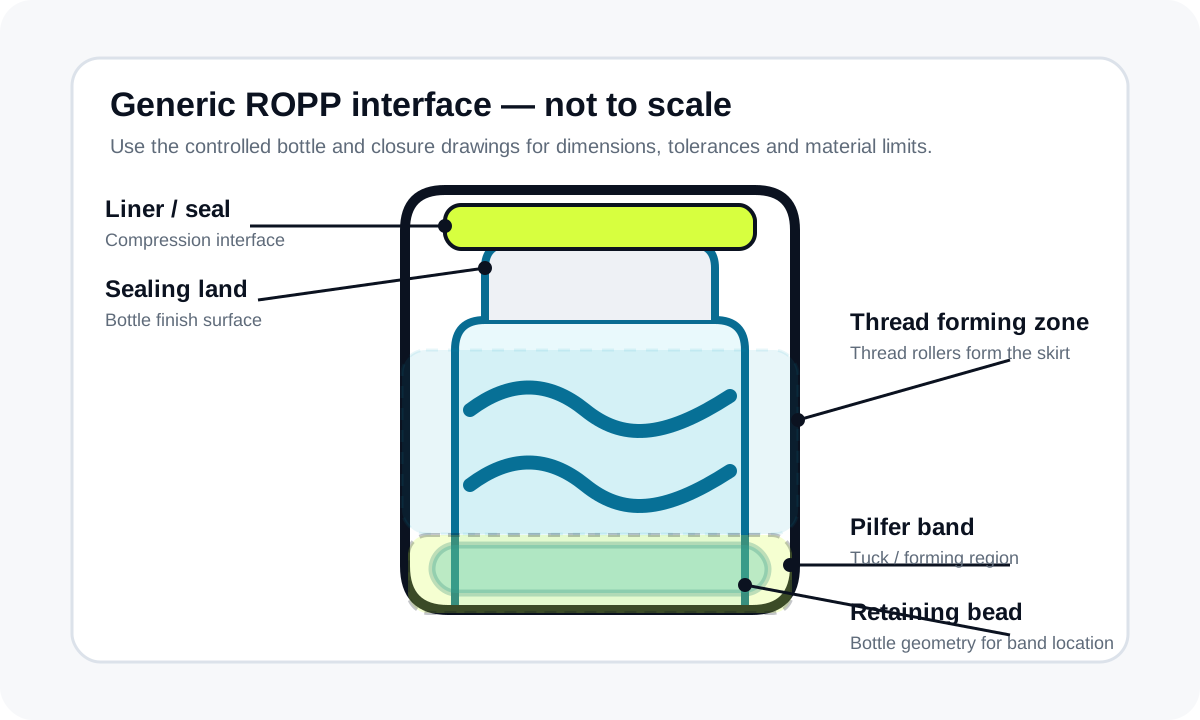
Sealing surface
Confirm geometry, damage limits and the liner contact intended by the closure supplier.
BVS and BVP are controlled bottle-finish families used with specified aluminium screw-closure systems. They are not interchangeable labels, so tooling must follow the exact bottle and closure documents.
Direct answer
They describe controlled glass neck geometries used with specified aluminium screw-closure systems. The project must use the exact bottle and closure documents for the intended product. A shared nominal diameter or similar appearance does not prove that the sealing land, thread, retaining feature, cap shell or capping tooling are compatible.
Always record the supplier, drawing reference and revision in the machine and quality file.
Practical distinction
The table is a selection aid, not a dimensional specification.
| Finish family | Practical project meaning | Do not assume |
|---|---|---|
| BVS | A family of deep glass finishes used with specified aluminium screw closures, with variants and guidance for defined product conditions. | That all BVS caps, liners or product conditions are interchangeable. |
| BVP | A controlled glass finish family used with specified aluminium screw closures for relevant still, non-carbonated liquids. | That a BVS closure or tooling set automatically applies. |
| Other ROPP finish | A supplier or standard may use another finish designation for a particular market or pack. | That a similar diameter or appearance proves compatibility. |
Drawing review
Confirm geometry, damage limits and the liner contact intended by the closure supplier.
Confirm where the aluminium shell is expected to follow the bottle profile and how the thread starts and runs out.
Confirm the bottle feature and closure band construction used to create first-opening evidence.
Confirm the vertical relationship between sealing, rollers, support and bottle handling.
Record the defined gauges, datum points and sampling method rather than measuring an informal feature.
Link the tooling and accepted samples to the exact bottle and closure drawing revisions.
Evidence route
Buyer questions
No. BVS and BVP identify different finish families and are controlled by different specifications and intended applications. A cap, capping head or change part approved for one finish should not be assumed suitable for the other without the current drawings, supplier confirmation and trials.
No. Nominal diameter is only one descriptor. The sealing land, thread profile, finish height, retaining features and tolerances determine how the closure is formed and retained. Use the full finish and closure specification rather than a diameter label.
The project should identify the approved bottle-finish drawing and matching closure drawing by supplier, reference and revision. Tooling decisions should use both documents together, supported by representative production samples and any applicable standard or data sheet.
Treat a changed drawing as a controlled packaging change. Compare the revised dimensions and notes, identify affected tooling and tests, obtain representative bottles and repeat the relevant first-off, opening, seal and tamper-band checks before releasing the format.
Lancing can review the controlled drawings and representative samples before tooling or machine scope is confirmed.