
Can ROPP capping be used for pressurised beverages?
Yes, but only when the aluminium closure, liner, bottle finish, product conditions and test method are approved as one compatible system and then proven on representative filled packs.
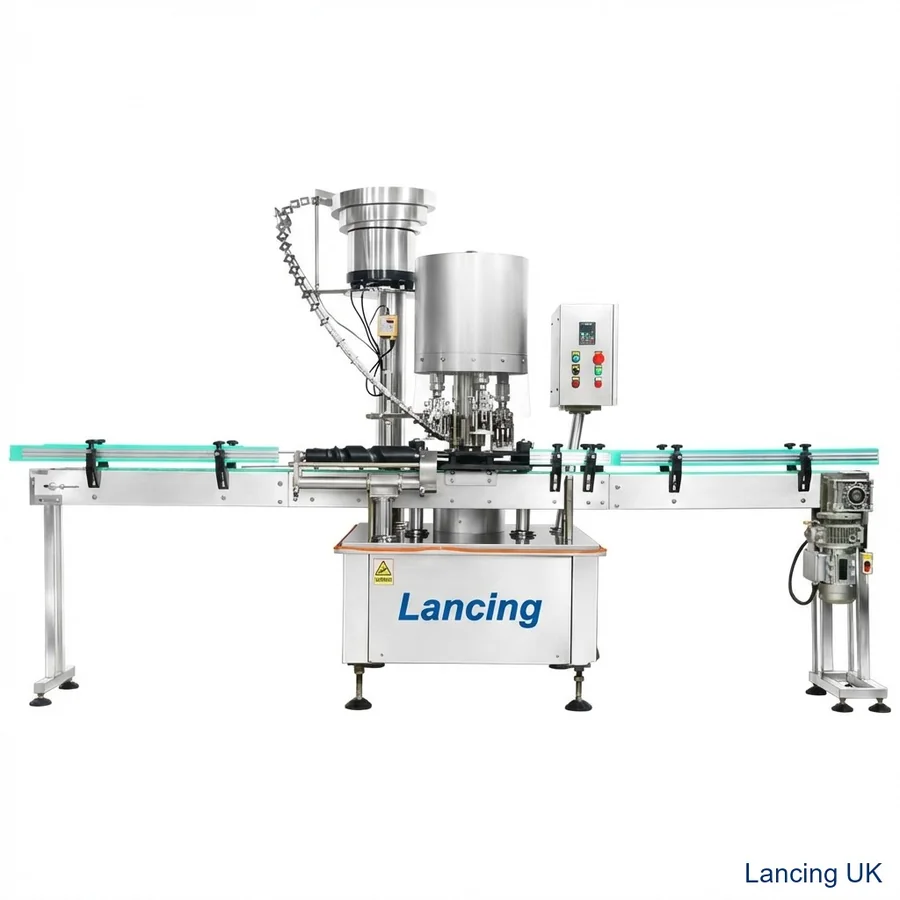
Direct answer
ROPP capping can be used for pressurised beverages only with a compatible approved pack system.
The closure, liner, bottle finish and product conditions must be designed to work together. The capping machine then has to form that approved closure consistently without damaging the bottle or decoration. A result from a still product, an empty bottle or a visually similar cap does not prove performance for a pressurised filled pack.
Final suitability and acceptance depend on the packaging suppliers' specifications, the product owner’s risk assessment and representative filled-pack testing.
What changes
Pressurised packs need more than a normal visual capping check.
| Area | Why it matters | Project evidence |
|---|---|---|
| Closure and liner | Construction must suit the product, finish and intended pressure conditions. | Controlled closure specification and supplier approval. |
| Bottle finish | Sealing land, thread and retaining geometry must match the closure system. | Current finish drawing, bottle supplier reference and production samples. |
| Product conditions | Pressure, temperature, foaming and chemistry can affect the assembled pack. | Representative fill and defined worst credible conditions. |
| Machine forming | Top pressure and roller settings must create the approved shape consistently. | Head-specific samples and controlled settings. |
| Line handling | Conveying, warming, cooling and downstream contact can disturb a fresh closure. | Connected-line trial and abnormal-state checks. |
| Acceptance | A visual pass alone cannot confirm retention or long-term performance. | Agreed filled-pack, opening, leak/pressure and tamper checks. |
Trial sequence
Build the pressurised-beverage trial in controlled stages.
Confirm the approved closure system
Use the current closure, liner and bottle-finish specifications for the actual product category.
Complete dry machine checks
Confirm cap placement, forming, bottle support, decoration protection and head consistency.
Run representative filled packs
Use the real product or an agreed representative medium under defined filling and capping conditions.
Condition and test samples
Apply the agreed temperature, storage, pressure/leak, opening and tamper checks.
Repeat across heads and lots
Show that the result is not limited to one capping head, one bottle mould or one cap lot.
Release the connected line
Confirm stops, restarts, cap starvation, downstream handling and reject control.
Buyer information
Information needed before a pressurised ROPP review.
- Product and carbonation or pressure conditions
- Fill temperature and expected temperature range
- Bottle and neck-finish drawing revision
- Closure, liner and tamper-band specification
- Representative bottles, caps and filled samples
- Existing packaging approval and test method
- Target line output and connected equipment
Buyer questions
Questions about ROPP capping for pressurised beverages.
Can any aluminium ROPP cap be used on a carbonated drink?
No. A pressurised beverage requires a closure, liner and bottle finish designed and approved for the product conditions. Similar-looking aluminium caps or finishes are not automatically interchangeable. Use the controlled supplier specifications and a filled-pack test plan for the actual product.
Why must the closure and bottle finish be approved as a system?
The seal, formed thread, retaining feature and tamper band depend on the combined geometry and material behaviour of the cap and bottle. Approval of either component in isolation does not prove that the assembled pack will retain the product or open as intended.
Which tests should be agreed for a pressurised ROPP pack?
The packaging owner and suppliers should define filled-pack pressure or leak tests, conditioning, storage orientation, temperature exposure, visual and dimensional inspection, opening behaviour and tamper-band checks. The exact method and limits depend on the product and approved packaging specification.
Does successful still-water testing prove suitability for the filled beverage?
No. Still water may help check basic machine forming, but it does not reproduce the product pressure, temperature, chemistry, foaming, contamination or storage conditions of the saleable beverage. Final approval should use representative filled packs and the agreed test method.
Review the pressurised pack before selecting the capper.
Send the approved closure system, product conditions, samples and test plan for a project-specific discussion.