
Liner and bottle land
Review the liner and seal guide before increasing compression.
Olive oil and edible oil packs need a secure seal, clean cap finish and dependable tamper band. ROPP capping can be a strong option for glass oil bottles when cap, liner and neck finish are specified correctly.
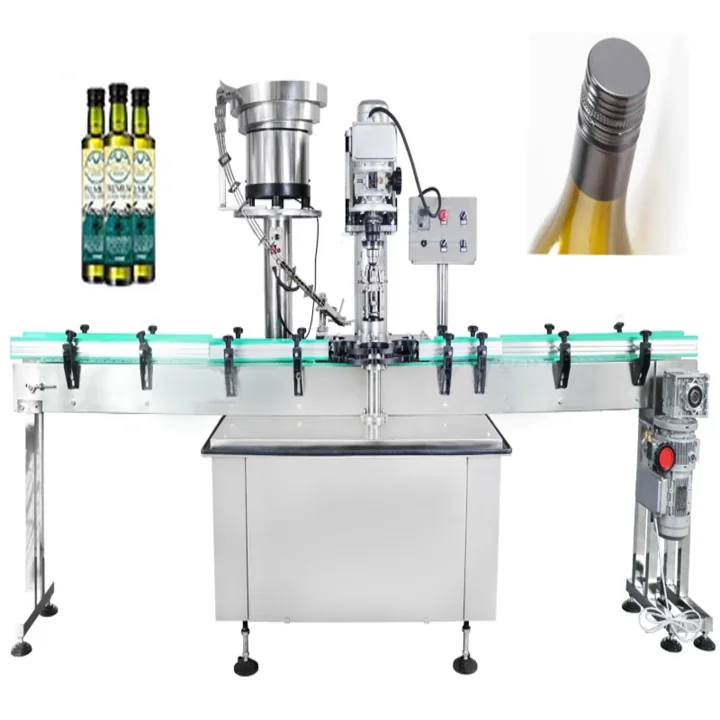
Oil bottle sealing
Even a small amount of oil on the bottle finish can influence liner contact, torque feel and leak performance. The filling-to-capping transition should minimise product on the sealing surface and keep the capper protected from contamination.
For best results, treat the cap, bottle and machine as one system. Lancing UK can review samples and advise whether a semi-automatic, inline automatic or rotary multi-head ROPP capping system is the correct route.
Selection table
Use these checks to narrow the machine choice and avoid packaging compatibility problems.
| Area | Why it matters | Action |
|---|---|---|
| Residue on neck | Can reduce seal consistency or affect torque | Control filling accuracy and wipe/inspection strategy |
| Oil-compatible liner | Helps maintain seal performance over time | Confirm with closure supplier and trials |
| Tall glass bottle | May need good body and neck support | Improves cap presentation and reduces skew |
Process
A documented setup gives better repeatability and easier troubleshooting.
Confirm bottle and aluminium cap compatibility.
Run tests with filled bottles, not only dry samples.
Check for oil contamination around the neck.
Measure opening torque after storage if required.
Review cleaning and access around the capping station.
Related ROPP guidance
These pages cover machine range, automatic options, troubleshooting and the enquiry route for bottle and cap samples.
FAQ
Yes. ROPP closures are used on many oil bottle styles when the bottle neck, cap and liner are compatible.
Oil on the sealing surface can affect liner contact and torque, so trials should include realistic filled samples.
Small producers may use semi-automatic cappers, while continuous lines may need automatic cap feeding and conveyor integration.
Yes. Leak checks are important because oily products can reveal small sealing issues.
Send your cap size, bottle height, neck finish, samples and target output for practical advice.
Filled-pack validation
Oil on the bottle sealing surface, liner or shell can change leak results and create a misleading fault pattern. The trial should reproduce the intended fill and transfer process while keeping sample identity clear.
Check the sealing surface and neck before filling. Separate damaged or contaminated bottles from the machine trial.
Use the intended oil or an agreed representative trial condition, including fill level and the actual delay or transfer between filling and capping.
Record dripping, splashing, foam or product carry-over. A capping adjustment should not be used to hide an upstream contamination problem.
Check cap seating, liner contact, thread, band and any pourer/insert condition using the approved sample standard.
Use the defined orientation, dwell, temperature and leak/pressure method; retain raw results and packaging-lot references.
Review the liner and seal guide before increasing compression.
Confirm component seating, supply method and whether it changes cap placement or cap-feed geometry.
Use the troubleshooting sequence to compare clean/dry, filled and rejected samples.
Send bottle, cap and insert samples, product information, neck-contamination observations, output and leak-test method.
Oil-pack seal control
Define the acceptable fill level, drip control, nozzle withdrawal and transfer so oil does not remain on the sealing surface or closure contact area. Trial the real pourer or insert, liner, bottle and oil condition, then inspect packs immediately and after the agreed storage orientation and conditioning period.
Check fill accuracy, neck finish, insert location and visible oil on critical surfaces.
Inspect seating, thread, tamper band, closure decoration and any squeeze-out or residue.
Use the agreed orientation, time, temperature and leak method with traceable samples.
Pourer insert compatibility
An internal pourer can change the closure assembly sequence, bottle-neck support, cap-feed route and finished-pack acceptance method. Approval from cap diameter alone is not sufficient: the controlled pack should identify the bottle finish, pourer or insert, liner and aluminium shell, including the production-equivalent product condition and any oil residue around the sealing area.
Functional release should distinguish visible thread and tamper-band formation from insert seating, controlled pouring, opening and leakage checks defined for the finished pack.