
Bottle control
Look for consistent spacing and stable support as each bottle passes into the capping zone. A production trial must use the intended bottle dimensions and tolerances.
Use the videos to understand bottle movement and capping-machine operation, then confirm suitability with your own production bottles, closures, line conditions and acceptance tests. A demonstration is orientation evidence, not a substitute for a controlled sample trial.
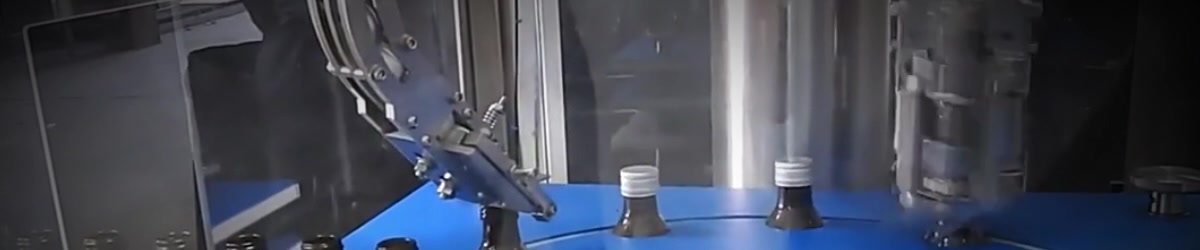
Rotary capping view
The wide-format video shows bottles being controlled around a rotary machine. Observe spacing, bottle support, cap condition, turret movement and the transition towards outfeed.
Look for consistent spacing and stable support as each bottle passes into the capping zone. A production trial must use the intended bottle dimensions and tolerances.
The head and tooling act while the bottle is controlled. The exact pressure-pad and roller sequence depends on the machine, closure and neck finish.
The video cannot prove opening, leak or tamper-band acceptance. Those outcomes require sampled bottles and an agreed test method.
Bottle-line view
This clip provides an additional view of bottles entering and leaving the working area. Use it to frame questions about infeed, head clearance, outfeed and inspection.
Video review checklist
| What you can observe | What the video cannot confirm | Evidence to request |
|---|---|---|
| Bottle movement and general machine architecture | Compatibility with your bottle tolerances and neck finish. | Production samples, bottle drawing and sample-trial result. |
| Capper head or turret operation | Correct roller profile, pressure and tooling for your closure. | Closure drawing, tooling schedule and approved first-off samples. |
| Apparent line flow | Net accepted output under your cap feed, stops and reject rules. | Defined timed run with fault and reject log. |
| Finished bottles leaving the machine | Opening performance, leak resistance and pilfer-band acceptance. | Traceable quality measurements and close-up inspection. |
| Machine scale and access | Fit within your floor plan, utilities, guarding and maintenance envelope. | Project layout, utility schedule and installation review. |
Next evidence step
Use the sample-trial guide to organise production-equivalent bottles and closures. For automatic equipment, add the cap-feed interface and factory acceptance plan. The quality-inspection guide explains what to retain after the video demonstration ends.
Buyer questions
Video can illustrate a machine type or operating principle. The quotation, approved specification, drawings and final acceptance plan define the project supply.
No. Editing, framing and short run conditions make a video unsuitable as an output guarantee. Use a defined timed trial and accepted-bottle count.
Yes. A line video can help explain bottle flow, available space, upstream and downstream equipment, but physical samples and dimensions are still required.
Provide the uncapped bottle finish, closure inside and outside, a correctly capped bottle, any rejected cap and the pilfer band after opening.
Send samples, drawings, line footage and the finished-cap checks your production team needs to approve.