
Roll-on pilfer-proof capping machine guidance for secure aluminium closures.
Roll-on pilfer-proof capping is used where a premium aluminium closure must seal, reclose and show evidence of opening. The machine does not rely on a finished thread inside the cap; it forms the cap to the bottle during the capping cycle.
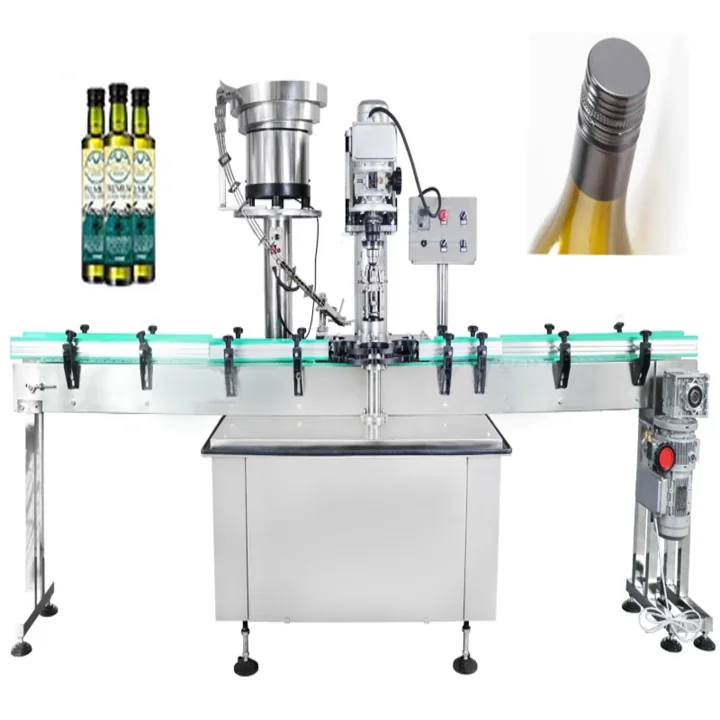
ROPP process
The process depends on cap, neck finish and roller setup working together.
A successful roll-on pilfer-proof application starts with compatible packaging. The cap material, liner, bottle thread, retaining bead and head tooling must be assessed as a system. When those details are matched, the capping machine can produce consistent opening torque and tamper-band formation.
For best results, treat the cap, bottle and machine as one system. Lancing UK can review samples and advise whether a semi-automatic, inline automatic or rotary multi-head ROPP capping system is the correct route.
Main process variables
- Top pressure and dwell
- Thread roller contact
- Pilfer band roller position
- Bottle support and stability
- Cap feed and presentation
- Liner compression
- Opening torque target
- Leak-test standard
Selection table
Key checks before specifying equipment.
Use these checks to narrow the machine choice and avoid packaging compatibility problems.
| Area | Why it matters | Action |
|---|---|---|
| Closure compatibility | Aluminium shell, liner and perforated band must suit the bottle finish | Prevents leaks, scuffing and weak tamper bands |
| Bottle neck finish | Thread and bead geometry must match the closure drawing | Controls thread formation and opening feel |
| Machine setup | Roller settings, top pressure and speed need documented trials | Improves repeatability across shifts and batches |
Process
Typical roll-on pilfer-proof sequence.
A documented setup gives better repeatability and easier troubleshooting.
1. Cap is placed squarely on the bottle neck
Cap is placed squarely on the bottle neck.
2. The capping head applies controlled downward pressure
The capping head applies controlled downward pressure.
3. Thread rollers shape the aluminium cap around the thread profile
Thread rollers shape the aluminium cap around the thread profile.
4. Band rollers form the lower skirt below the neck bead
Band rollers form the lower skirt below the neck bead.
5. The finished closure is checked for cap height, torque and appearance
The finished closure is checked for cap height, torque and appearance.
Related ROPP guidance
Continue the machine-selection process.
These pages cover machine range, automatic options, troubleshooting and the enquiry route for bottle and cap samples.
FAQ
Questions about roll-on pilfer proof capping machine.
What does roll-on pilfer-proof mean?
It means the closure is rolled onto the bottle to create a thread and a lower tamper-evident pilfer band that separates when opened.
Why use aluminium ROPP caps?
Aluminium ROPP caps give a premium finish, resealability and tamper evidence for bottles such as wine, spirits, oils and syrups.
Can ROPP caps be applied automatically?
Yes. ROPP capping can be semi-automatic, inline automatic or rotary multi-head depending on speed and production requirements.
What affects ROPP opening torque?
Opening torque is affected by liner compression, thread formation, cap material, bottle finish, product contamination and roller settings.
Need help with this ROPP capping requirement?
Send your cap size, bottle height, neck finish, samples and target output for practical advice.