
Preassembled closure
The insert or pourer arrives retained within the closure assembly. Feeding must preserve that assembly, orientation and decoration before the cap is placed and formed.
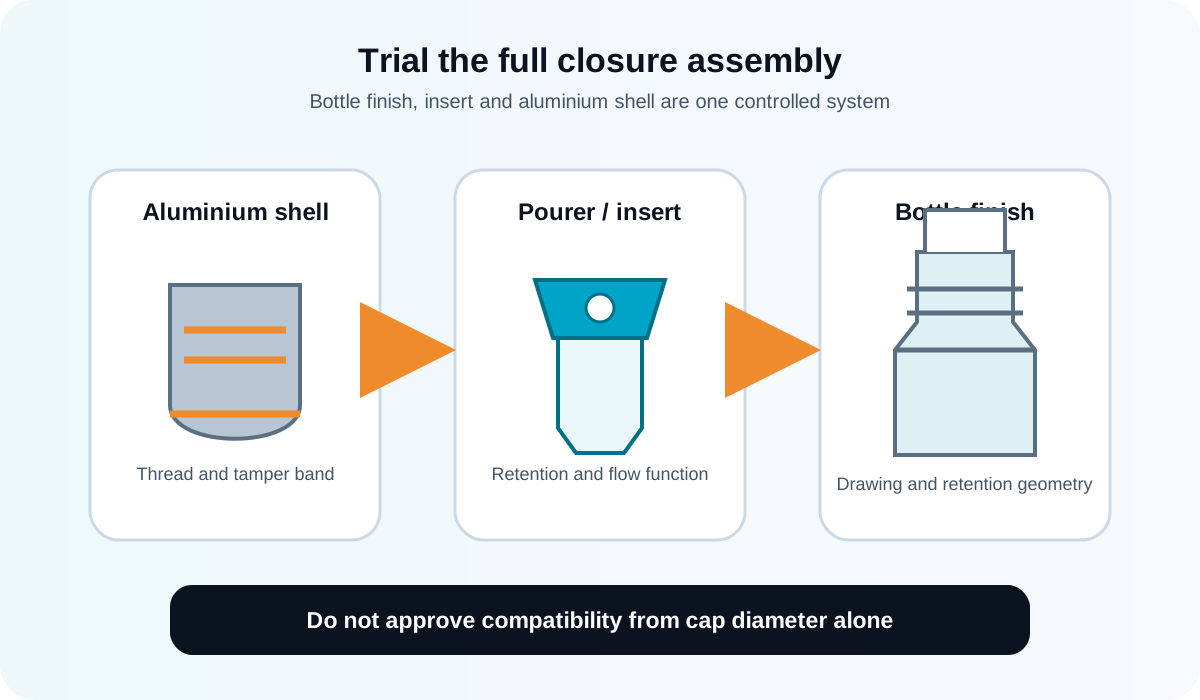
Control the bottle, internal pourer or anti-refill insert and aluminium ROPP shell as one approved pack before selecting feeding, tooling and acceptance tests.
Answer first
A non-refillable ROPP closure is a closure system in which the formed aluminium cap works with an internal pourer, valve or anti-refill insert. The machine route depends on whether the insert arrives preassembled, is placed in the bottle before capping, or is applied as a separate operation, so the complete bottle–insert–closure assembly must be trialled together.
“Non-refillable” describes a function of the approved closure system; it is not something a standard ROPP head can create by itself. The closure supplier’s drawings, assembly instructions and test method define the required components and acceptance boundary.
Assembly route
The same visible cap can require a different machine and feed arrangement when the internal component is supplied or assembled differently.
The insert or pourer arrives retained within the closure assembly. Feeding must preserve that assembly, orientation and decoration before the cap is placed and formed.
A separate operation seats the insert in the bottle neck before the aluminium shell is applied. Insert presence, seating and retention need their own controls and rejected-pack references.
Some systems use dedicated tooling or a sequence defined by the closure owner. Do not assume that the capper should press, retain or test an insert unless the approved system requires it.
Compatibility
| Interface | Questions to resolve | Evidence to retain |
|---|---|---|
| Bottle finish | Does the neck geometry support the insert, liner seal, thread formation and tamper-band feature without damage? | Approved drawing revision, measured samples, sealing-land condition and retained references. |
| Insert or pourer | How is it oriented, seated and retained, and which condition shows incomplete or damaged assembly? | Assembly instruction, good and failed references, seating or retention method and lot identity. |
| Aluminium closure | Are shell height, diameter, liner, decoration, bridges and lower band compatible with the bottle and head? | Closure drawing, supplier reference, incoming inspection and approved formed samples. |
| Capping head and tooling | Can the pressure pad and roller arrangement form the shell without displacing the insert or marking the pack? | Head/tooling identity, settings, head-by-head samples and any change-part list. |
| Cap and insert feeding | Will storage, orientation, chute contact and transfer preserve the assembled components at the required line rate? | Feed trial, buffer condition, fault/restart record and controlled rejected examples. |
| Finished-pack function | What seal, opening, pour, reseal, tamper and anti-refill tests belong to the approved closure system? | Named test methods, conditioning, raw results, sample identity and approval authority. |
Feeding and tooling
Insert depth, internal projections, skirt length, decoration and centre of mass can alter how an assembled closure behaves in a bowl, elevator, chute and transfer point. A route that works for an empty aluminium shell may separate, scuff, invert or jam an assembled non-refillable closure.
The capping head must also apply the required top pressure and forming action without pushing the insert beyond its approved position. Tooling selection therefore follows the complete assembly drawing and trial evidence, not a generic ROPP-cap label.
Trial and acceptance
Use the closure owner’s requirements and the customer’s product risk to set the test depth.
Confirm component identity, insert seating, liner contact, cap height, thread definition, tamper-band formation and visible damage before increasing speed.
Apply the agreed leak, opening, pouring, reseal and non-refillable-function methods after the required conditioning. Record the method rather than only “pass”.
Include normal replenishment, stops, restarts, head/station sampling, reject handling and the packaging lots intended for production.
Buyer questions
Not automatically. Some assemblies can be handled by a compatible ROPP head and feed system, while others require insert placement, dedicated closure handling or project-specific tooling. Confirm the assembly drawing and run production-equivalent samples.
Only where the approved closure system and machine design explicitly use that sequence. Otherwise insert placement should be treated as a separate controlled operation so that seating, retention and damage can be verified.
Send the approved bottle, aluminium shell, liner and insert or pourer from identified production lots, plus drawings, assembly instructions, good finished packs and any representative rejected packs.
No. Vision can help confirm visible components and assembly position, but anti-refill performance is a functional property of the closure system and needs the test method defined by the responsible closure and pack owner.
Send drawings, sample lots, assembly method, target output and the finished-pack tests that will decide approval.